
How to Buy a Gas Station in 2026, Costs, Tanks and Financing
Median asking price is $599,500 and fuel is only 38.8% of profit. How to check the tanks, verify both revenue streams, and finance a gas station purchase.

$200,000–$1,500,000
Est. Cost
4 to 8 months
Timeline
7
Total Steps
How Do I Buy a Gas Station
You buy a gas station in seven moves. Pick your model first. Branded or unbranded fuel, franchise or independent, with or without the real estate. Search the marketplaces and talk to fuel jobbers, they know who wants out. Check the tanks before anything else, the environmental file can kill the deal or become your liability. Verify fuel volumes through supplier statements and inside sales through POS data and tax returns. Value the station on store profit, not pump traffic. Finance it, most buyers use an SBA 7(a) loan with about 10% down, often with seller financing stacked on. Then close with the fuel contract assigned and the licenses transferred. The median asking price for an established station on BizBuySell is $599,500 as of July 2026, and a purchase takes 4 to 8 months.
You Buy the Store, the Gas Pays the Rent
The margin math surprises first time buyers. Per NACS 2025 industry data, fuel is 65% of sales dollars and 38.8% of gross profit. Inside sales run the opposite way. Food, drinks, and merchandise carry margins several times fuel's, and inside sales have grown 23 years in a row, topping $341 billion in 2025. What this means for a buyer is simple. Two stations selling the same gallons are not worth the same money. The one with a strong store attached is the business. The one without is a price war with a canopy. Judge every listing by its inside numbers first.
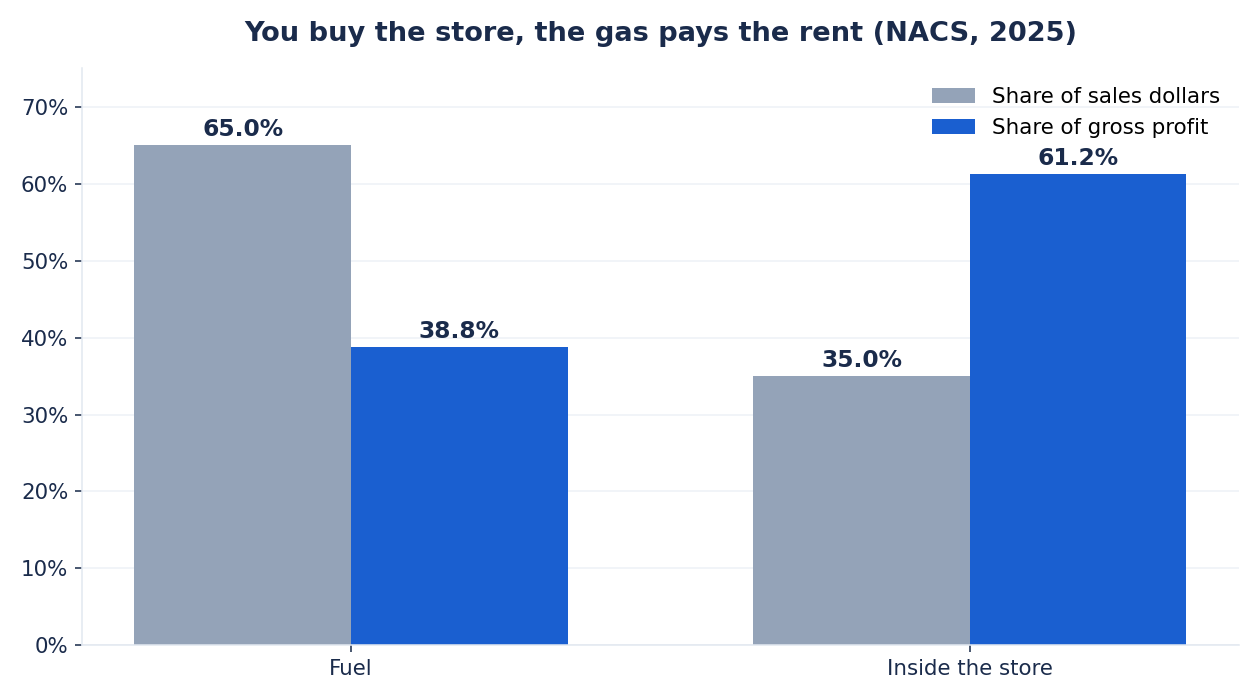
That split is why a station is priced on earnings and not on gallons. Our business valuation calculator runs the same maths from either side of the counter, and shows a seller what actually reaches the bank.
The Tanks Decide the Deal
Underground storage tanks are why gas station deals need their own playbook. Get the compliance file first. Do it before you get attached. Tank registrations, tightness test results, leak detection records, and any open cleanup cases. Then order a Phase I environmental site assessment, your lender will demand one anyway. If the Phase I flags concerns, a Phase II tests soil and groundwater. Contamination does not stay the seller's problem, it attaches to the property and its new owner. Check whether the state's UST cleanup fund covers the site and whether past claims exist. A station with clean paperwork and tested tanks is worth paying up for. A station whose seller shrugs at these questions is not a discount, it is a lawsuit with fuel islands.
Verify Both Revenue Streams
Fuel and inside sales lie differently, so check them differently. Fuel volume is easy to verify, the fuel supplier's statements show every gallon delivered. Ask for 24 months. Inside sales take more work. Pull POS reports, lottery commission statements, and tax returns, and make sure they agree with each other. Sit in the store and count customers at different hours. And read the fuel supply agreement itself. It sets your fuel cost, its remaining term follows the property, and a bad one caps your margin for years. Have a lawyer review the assignment terms before you sign anything.
How to Finance the Purchase
The stack has bigger numbers here. An SBA 7(a) acquisition loan is the spine. Down payments start around 10%. Stations with real estate included borrow against the property too. Seller financing is common, and a seller who carries paper believes their own books. If part of that note is meant to cover half of your SBA down payment, it has to sit on full standby. That means no payments at all until the SBA loan is repaid, and the seller signs SBA Form 155 to agree to it. Ask about that before you settle the price. Equipment loans cover pump upgrades, EMV compliance, and coolers against the equipment itself. Once you own the station, its trading history opens working capital and revenue based products for expansion. Budget past the purchase price, you will buy the fuel in the tanks at closing plus a first delivery, and fuel is paid in days while your card processing settles slower. Unsure where your finances put you? Route yourself in four questions first. Smaller budget and simpler machine? Our laundromat buyer guide covers the gentler end of the buy a business path.
Station already trading under your name?
National Funding reads the station's revenue history and quotes working capital in about 24 hours, useful for the retool and the first fuel cycles.
Check working capital options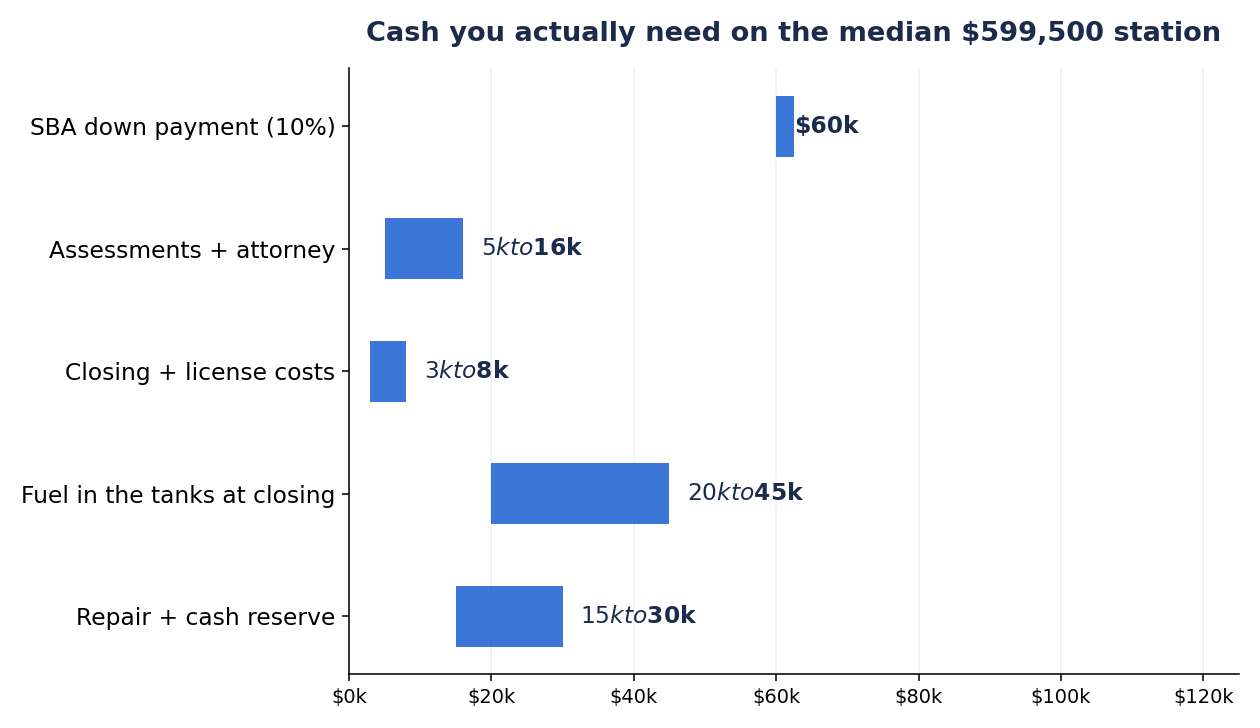
Red Flags That Kill Deals
An environmental file the seller cannot produce. Open cleanup cases with no state fund coverage. A fuel supply agreement with years left at bad terms, or one that cannot be assigned. Inside sales claims the tax returns do not support. Lottery and tobacco license issues that block transfer. Equipment surprises, pumps past their service life and coolers on their last compressor, get replacement quotes before you accept the seller's numbers. And a price justified by fuel gallons alone. Gallons are traffic, not profit.
Step-by-Step Process
- 1
Pick your model before you shop
Four choices shape everything. Branded fuel (a major flag on your canopy, marketing support, stricter contract) or unbranded (cheaper fuel, your own name, more price freedom). Franchise or independent. Real estate included or leasehold. And attended hours. A branded leasehold store and an independent fee simple property are different businesses wearing the same canopy. Decide which one you are hunting, then filter everything else out.
$0 1 weekTips
- If the real estate is available, price both versions, lenders favor deals with dirt.
- Franchise buyers, read the franchise disclosure document before falling for the brand.
Common Mistakes
- Shopping by asking price instead of by model.
- Assuming a branded contract transfers automatically, assignments need supplier approval.
- 2
Find stations, marketplaces and jobbers
BizBuySell alone lists over 800 stations at any time, with a median asking price of $599,500 as of July 2026. But the quiet deals move through fuel jobbers, the distributors who supply independent stations. They know which owners are retiring and which stores are struggling before any listing appears. Call the jobbers in your target area and tell them you are buying. Business brokers who specialize in petroleum retail exist in most states.
$0 1 to 3 months bizbuysell.comTips
- Visit as a customer at morning rush, lunch, and late evening, the store tells its own story.
- Ask the jobber what the site's fuel volume history looks like, they often know it cold.
Common Mistakes
- Judging a station by gallons sold, gallons are traffic, not profit.
- Ignoring listings with bad photos, tired owners underprice good dirt.
- 3
Check the tanks before you fall for the store
Get the underground storage tank compliance file before your second visit. Tank registrations, tightness tests, leak detection records, open cleanup cases. Then order a Phase I environmental site assessment, your lender will require one anyway. If it flags concerns, a Phase II tests soil and groundwater. Contamination follows the property, not the previous owner. Check whether the state UST cleanup fund covers the site and whether claims were ever filed. A seller who shrugs at these questions is showing you the exit.
$2,000 to $6,000 for assessments 3 to 6 weeksTips
- Ask your state environmental agency for the site's public UST records, many post them online.
- Confirm tank age and material, steel tanks near end of life are a six figure replacement.
Common Mistakes
- Paying for a Phase I after negotiating price instead of before.
- Assuming the state fund covers everything, coverage caps and eligibility rules vary.
- 4
Verify both revenue streams separately
Fuel volume is the easy half, the supplier's statements show every gallon delivered, ask for 24 months. Inside sales take real work. Pull POS reports, lottery commission statements, and tax returns, and check they agree with each other. Sit in the store and count customers at different hours. Then read the fuel supply agreement itself. It sets your cost per gallon, its term survives the sale, and a bad one caps your margin for years. Lawyer review on the assignment terms is not optional.
$0 to $1,500 3 to 4 weeksTips
- Cross check inside sales against lottery commissions, the lottery does not exaggerate.
- Ask for card processing statements, they anchor the non cash share of sales.
Common Mistakes
- Accepting a spreadsheet of cash sales nobody can verify.
- Skipping the fuel agreement reading because the numbers looked good.
- 5
Value the station on store profit
Price the verified earnings, weighted toward the inside business. Per NACS 2025 data, fuel is 65% of industry sales dollars and 38.8% of gross profit, so two stations pumping identical gallons can deserve very different prices. Real estate included changes the math again, part of your price is a property with tanks in it, valued with the environmental status priced in. Get replacement quotes for pumps and coolers near end of life and subtract reality from the ask.
$0 1 to 2 weeksTips
- Ask what the EMV pump upgrade status is, non compliant pumps carry chargeback liability.
- Price the deal twice, with and without the seller's addbacks, believe the smaller number.
Common Mistakes
- Paying a store premium for a location whose inside sales are actually lottery only.
- Valuing the dirt like clean commercial land, tanks discount real estate until proven clean.
- 6
Build the financing stack
The stack has bigger numbers here. An SBA 7(a) acquisition loan is the spine. Figure about 10% down. That is the strong SBA 7(a) deal. Weaker books or leasehold deals run 15% to 20%. Stations with real estate borrow against the property too. Seller financing is common, and a seller who carries paper believes their own books. Equipment loans cover pump upgrades, EMV compliance, and coolers against the equipment itself. Once you own the station, its trading history opens working capital and revenue based products for expansion.
10% to 20% down typical 45 to 90 daysTips
- Apply with the station's books, the business is the borrower.
- Ask lenders early about their environmental requirements, the Phase I timing lives on their clock.
Common Mistakes
- Forgetting you buy the fuel in the tanks at closing, that is real cash on top of the price.
- Financing the purchase on short term daily debit products, acquisitions need term debt.
- 7
Close with the contracts, then change nothing for 90 days
Closing a station is a paperwork relay. The fuel supply agreement gets assigned with supplier approval. Lottery, tobacco, alcohol, and food licenses transfer on their own timelines, start them early, some states will not rush. Use bulk sale escrow so the seller's debts do not follow the store. Then run it exactly as bought for 90 days. Learn the delivery rhythm, the shrink patterns, and the regulars before changing prices or planograms. You paid for the store's habits, do not break them in week one.
$3,000 to $8,000 closing and license costs 30 to 60 daysTips
- Meet the clerks before closing, they know where the shrink is.
- Schedule the fuel inventory measurement for the morning of closing, both parties present.
Common Mistakes
- Missing a license transfer window and selling dark for weeks.
- Rebranding the coffee station before learning it was the reason half the regulars came.
Cost Breakdown
| Item | Cost Range | Notes |
|---|---|---|
| Purchase price, established station | $200,000 to $1,500,000+ | BizBuySell median asking is $599,500 (July 2026). Real estate included pushes the top of the range well past this. |
| Down payment (SBA 7(a) route) | 10% to 20% | About 10% on strong deals with real estate, more for leasehold or weaker books. Seller financing reduces cash at closing. |
| Phase I environmental assessment | $2,000 to $6,000 | Lender required. A Phase II, if triggered, costs more and takes longer, budget time as much as money. |
| Attorney, contracts and licenses | $3,000 to $10,000 | Fuel agreement assignment, lease or deed work, bulk sale escrow, license transfers. |
| Fuel inventory at closing | Varies with tank levels | You buy the gas in the ground the day you close, measured that morning. Plan real cash for it plus your first delivery. |
| Equipment reserve | Varies by site age | Pumps, EMV upgrades, coolers, and canopy lighting age on their own schedules. Get quotes during diligence, not after. |
Frequently Asked Questions
The range is too wide for one honest number. The store decides it. Fuel contributes cents per gallon after processing fees. The inside business, food, drinks, lottery, and services, is where owner profit concentrates, per NACS the industry's gross profit majority comes from inside the store. A station with a weak store can pump plenty of gallons and still barely pay its owner.
It can be. The condition is buying the store, not the canopy. Stations with strong inside sales, clean tanks, and fair fuel contracts are durable businesses. Stations bought on gallon counts alone are traps. The environmental file and the fuel agreement decide more of your outcome than the location's traffic count.
Figure about 10% down. That is the strong SBA 7(a) deal. Weaker books or leasehold deals run 15% to 20%. Seller financing on top cuts the cash needed at closing.
The median asking price for an established station on BizBuySell sits at $599,500 as of July 2026. Small rural stations list under $200,000. Large sites with real estate and strong stores run into the millions. Building new costs more than buying in most markets.
Realistically, no. The combination that gets close is seller financing stacked on an SBA loan, plus equipment refinancing. Even then, plan on real cash for fuel inventory, licenses, and reserves. Anyone promising true zero down is selling you something other than a gas station.
Not always, but it changes everything. Owning the dirt means the tanks and their history are fully yours, which is why the Phase I matters even more. Leasing means the fuel agreement, the lease, and their transfer terms are your real assets. Lenders prefer deals with real estate, and so does your exit price.
This page is for educational and informational purposes only and is not professional financial, legal, environmental, or investment advice. Prices, lending terms, and regulatory requirements vary by state and by deal. Environmental liability rules are unforgiving, use qualified professionals for assessments, contracts, and closing. StartupOwl earns a referral fee on some financing providers, which does not affect our guidance.
Sources & References
About the Author
Editor, StartupOwl
Eliot leads StartupOwl's state data research. He maintains the site's fifty state records of LLC filing fees, annual costs, processing times, and small business grant programs, checking each figure against the state office that publishes it and logging the date it was verified. Based in New Jersey, he has spent his working life in and around small businesses, and he writes for the founder who wants the real number rather than the advertised one. Every figure under his byline traces to a named source, and when a state proves a number wrong, the correction is published, not buried.
Was this article helpful?
Questions about How to Buy a Gas Station in 2026, Costs, Tanks and Financing
No comments yet. Ask the first question and a member of our team will answer.
Leave a comment