
8 Best AI Bookkeeping Tools for Small Business
We checked 11 AI bookkeeping tools. Eight made the cut. Prices run from $0 to $719 a month, and the gaps are wider than most lists admit.

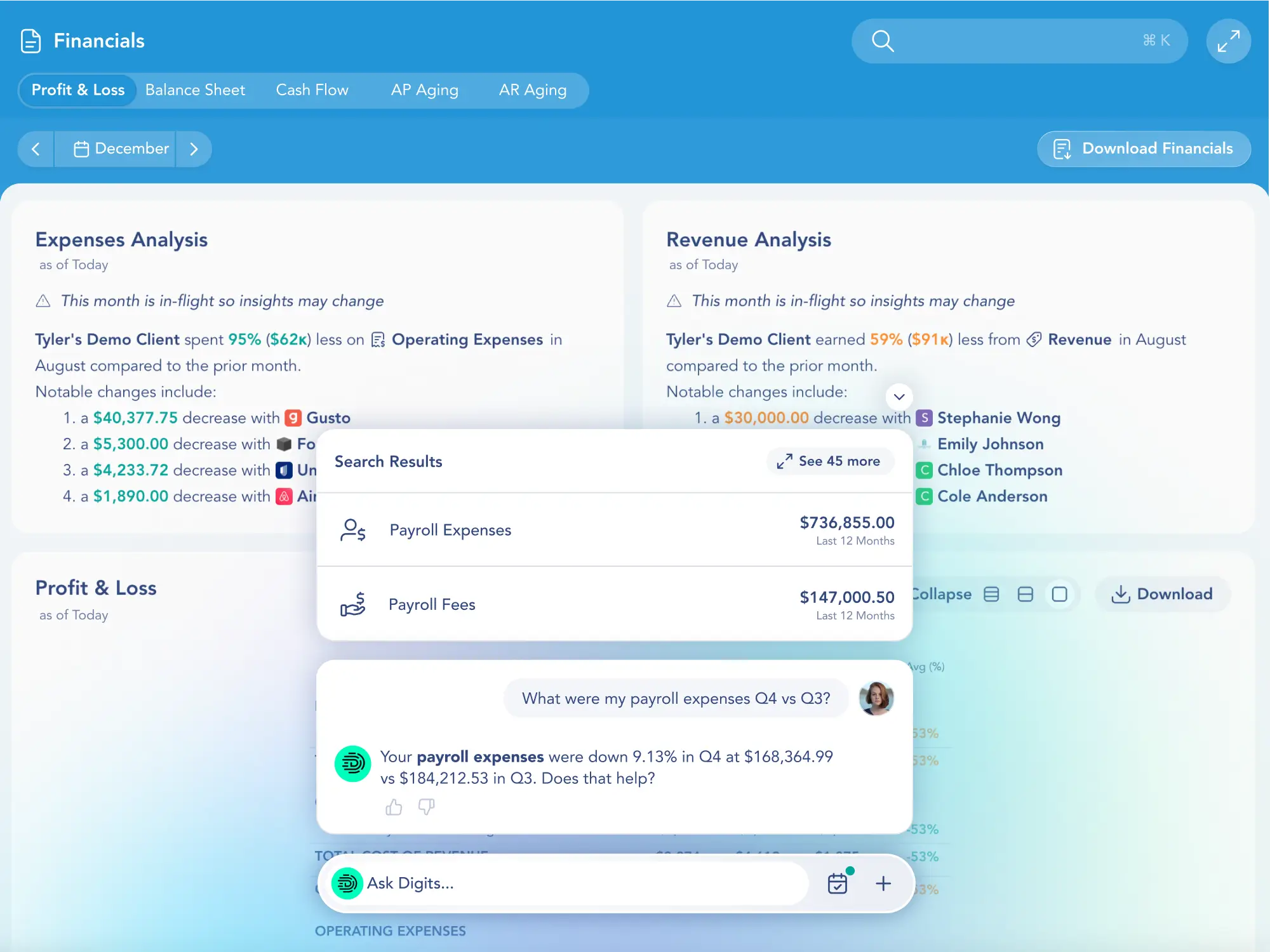
- Digits leads this category at $65 a month. Its Autonomous General Ledger was trained on more than $825 billion in real transactions. It sorts and reconciles without manual rules.
- The sticker is not the bill. Zoho Books is free under $50,000 in revenue. Zeni runs $494 to $719 a month and needs a $140 QuickBooks Online Plus plan on top, so its real floor is $634.
- AI-first does not mean costly. Bookeeping.ai is AI-first at $35, under QuickBooks at $38. At the top of the market you are buying people, not better software.
- No tool replaces your accountant. You still need a person for tax calls, odd transactions and judgment.
Short answer: Digits at $65 a month is the best AI bookkeeping tool for most small businesses. It sorts and reconciles your transactions with no manual rules. Want a free option? Zoho Books gives you real double-entry accounting at $0 while your revenue stays under $50,000 a year. Just know that Zoho never says which plans carry its Zia AI, not even on its own AI page. If you are VC funded and want people checking the AI, Zeni adds a finance team from $494 a month.
AI bookkeeping tools promise to take the dull work off your desk. Sorting transactions. Matching receipts. Reconciling bank feeds and building reports. Some of them do it. Many just put an AI label on the same rule-based automation we have had for years.
We spent weeks on 11 platforms. We looked at how each one really uses AI, what it charges, and where it falls apart. The price spread is the first shock. Zoho Books has a free plan. Zeni starts at $494 a month and pairs AI agents with a human finance team. Which one fits comes down to your size, your budget, and how much you want to hand over.
Our pick is Digits at $65 a month. Its ledger learned from more than $825 billion in real transactions, and it works without the manual rules older tools demand. It is not right for everyone. Three tools here pay us nothing, and we kept them anyway. They earned the spot.

Digits
From $65/mo
Digits built its Autonomous General Ledger on more than $825 billion in real transactions. That shows. At $65 a month it automates more than tools costing three to ten times as much. It sorts, reconciles and reports with little input from you, and it gets better as it learns how your business spends.
Try Digits FreeSide-by-Side Comparison
| Feature | |  |  |  |  |  |  |  |
|---|---|---|---|---|---|---|---|---|
| Monthly Price | From $65/mo | From $38/mo | Free - $275/mo | From $35/mo | From $23/mo | From $299/mo | From $494/mo | $129/mo |
| AI-First Architecture | Yes | No (AI overlay) | No (AI overlay) | Yes | No (AI overlay) | Yes | Yes | Yes |
| Auto-Categorization | Autonomous | Needs review | Needs review | 80% faster | Learns patterns | 80% at 100% confidence | Saves ~70 hrs/mo | Daily, inside QBO or Xero |
| Bank Reconciliation | AI-automated | AI-assisted | Early access | Included | Manual | AI-automated | AI-automated | Daily auto-sync |
| Free Plan | No (30-day trial) | Yes, 2 invoices/mo | Yes (under $50K/yr) | No (30-day trial) | No (30-day trial) | No | No | No |
| Integrations | 12,000+ via Plaid | 800+ apps | Zoho ecosystem + 50+ | Plaid + Stripe | 100+ apps | 30+ revenue, 12K+ banks | QBO, Stripe, Gusto | QBO, Xero, Zoho |
Full Reviews
AI-first bookkeeping with the world's first Autonomous General Ledger, trained on $825B+ in transaction data.
Pros
- Autonomous General Ledger handles categorization and reconciliation without manual rules or human intervention.
- Trained on $825B+ in real transaction data, giving it pattern recognition that most tools can't match.
- Clean, modern UI with real-time financial dashboards that founders actually enjoy using.
- 30-day free trial on all plans, so you can test before committing.
Cons
- Bank sync relies on Plaid, which means occasional connection drops with smaller banks or credit unions.
- No traditional affiliate or partner program for content creators yet.
- The price steps up quickly, $65 for Essentials, $100 for Core and $250 for Pro, so the entry figure is not what a growing business ends up paying.
- Newer platform without the 20-year track record of QuickBooks or FreshBooks.
$38
Pros
- Nearly universal CPA compatibility. Your accountant almost certainly already works with QuickBooks, which saves file conversion at tax time.
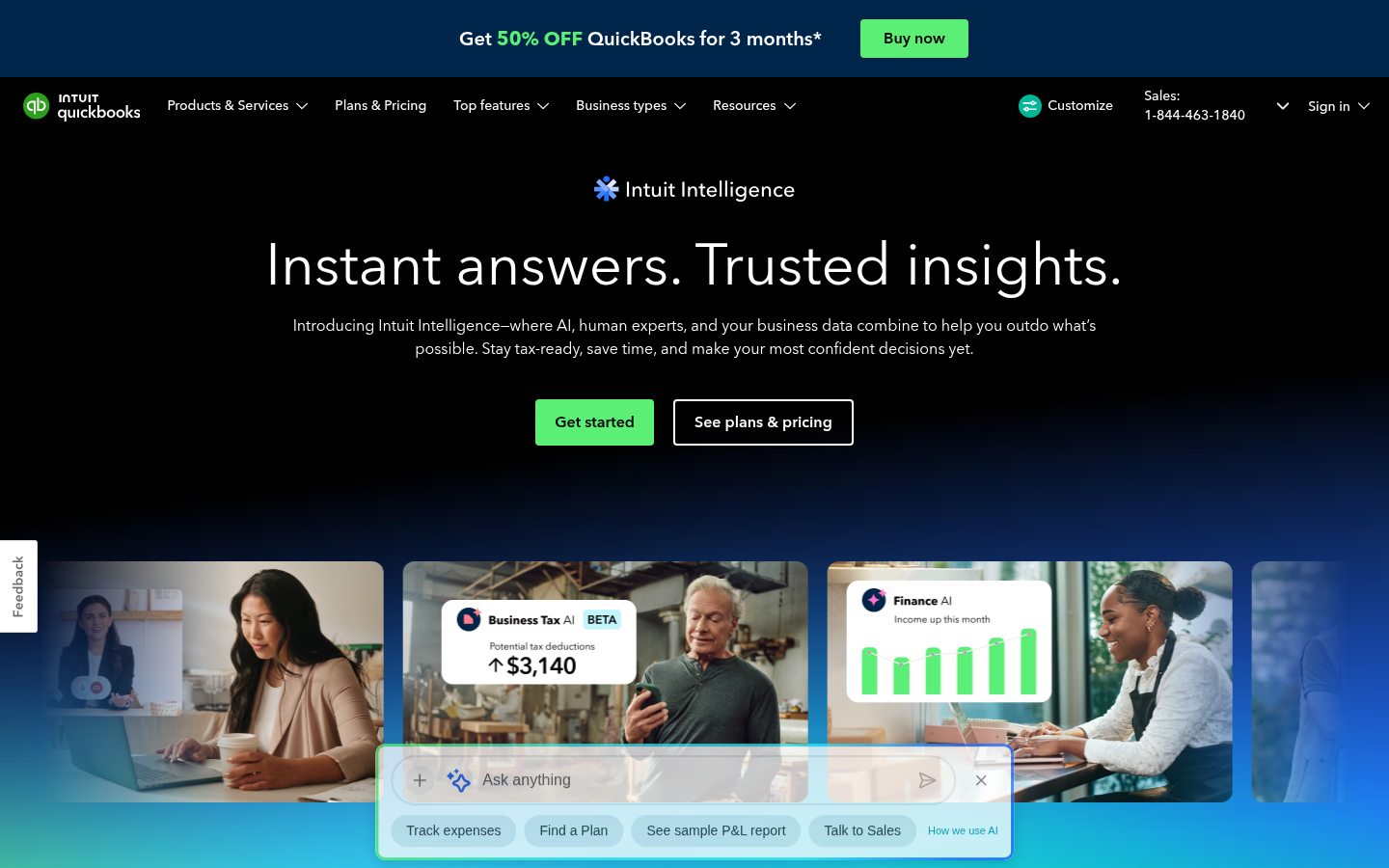
- Over 800 app integrations, more than any competitor in the bookkeeping category.
- The feature set scales from simple invoicing on the $38 a month plan to accrual accounting, inventory and project profitability on the $140 Plus plan.
- Mobile apps rated 4.6 on iOS and 4.7 on Android, with working invoicing and receipt capture on the go.
Cons
- Unpredictable price rises. Intuit lifted three of its four paid plans in 2026, and the U.S. Trustpilot profile for Intuit sits at 1.1 from 1,488 reviews.
- Support is thin for the price. Phone support comes with any paid plan, but priority support and training are reserved for the $340 a month Advanced tier.
- The AI auto-categorization is overconfident and got about a third of our test transactions wrong, creating more cleanup than it saves.
- A bookkeeper who actually does your books costs from $300 a month, after a cleanup fee that starts at $600. Those two prices sit on separate pages, not on the pricing grid.
Free - $275/mo
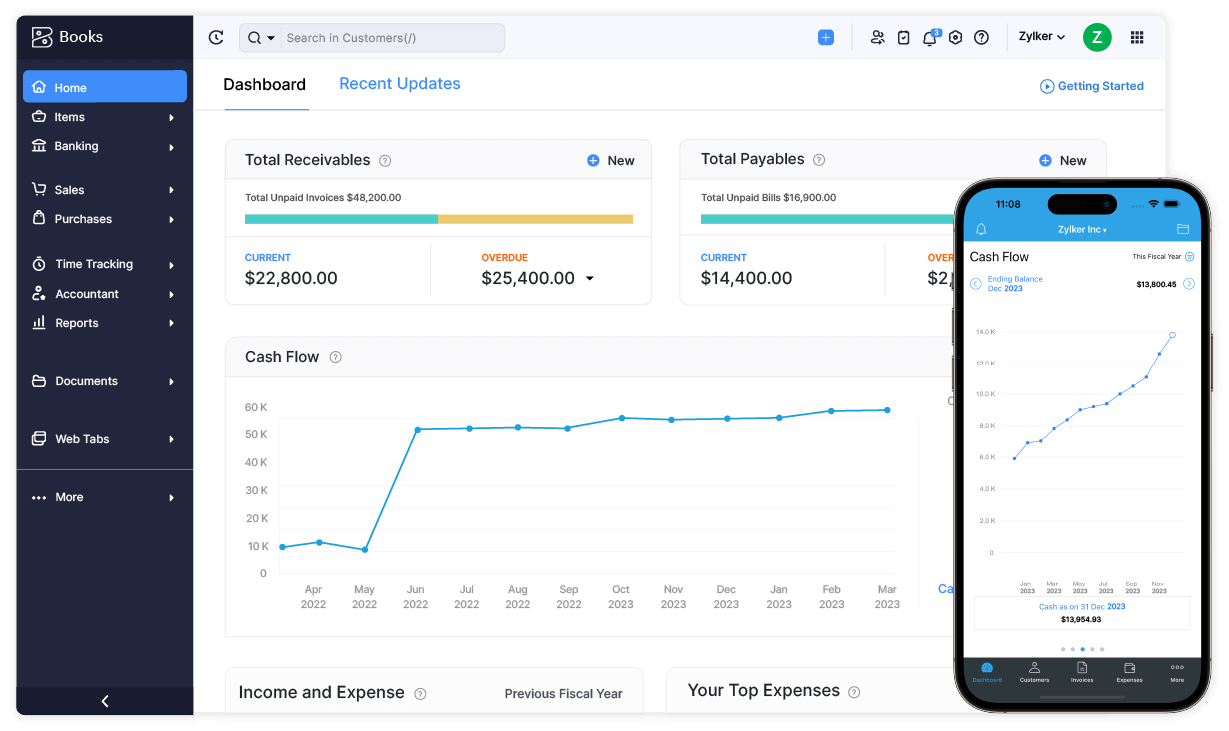
Free accounting while your revenue stays under $50K a year, with paid plans from $15 a month billed annually.
Pros
- The free plan is real double-entry accounting rather than a trial. Invoices, quotes, expenses, journals, and 50+ reports run at $0 with no expiry while your revenue stays under $50K.
- 1099 handling is included at $0. W-9 management, contractor tracking, and actual 1099-MISC and 1099-NEC preparation sit on the free plan, which is unusual at that price.
- Standard at $15 a month billed annually is the cheapest paid accounting plan on our roster, and it includes automatic bank feeds and API access rather than charging separately for them.
- Six tiers from $0 to $240 a month mean the software stretches from a side project to warehouse inventory and Shopify channels without a migration.
Cons
- The $50K annual revenue threshold is a cliff, not a nudge. Zoho states the free plan lasts indefinitely only while revenue stays under it, so growth is what ends the free ride.
- No automatic bank feeds on the free plan. You import statements and reconcile by hand, and feeds only start at Standard, which is the same catch that makes Wave's free tier cost more than $0 in practice.
- Free plan support is email only. Voice and chat start at Standard.
- Add-ons are blocked on the free plan except document autoscans, so extra users at $2.50 each, locations at $10, and expense claims at $7 per active user all require a paid tier first.
- Zoho markets a Zia AI assistant but publishes no plan availability for it. It appears on neither the pricing page nor the full plan comparison, so what you actually get for $0 is undocumented.
From $35/mo
The cheapest AI-first bookkeeping tool available. Uses both ChatGPT and Claude for transaction categorization.
Pros
- Lowest price point for AI-first bookkeeping at $35 a month, under every AI-first competitor here.
- Uses both ChatGPT and Claude AI models for categorization, giving it broader pattern matching.
- Conversational AI assistant (Paula) that answers financial questions in plain language.
- 30-day free trial with no credit card required to test the platform.
Cons
- Very small team (4 employees as of 2023). Long-term stability is an open question.
- US and Canada only. No support for international businesses.
- No direct sync with QuickBooks or Xero. You can import data but there's no live connection.
- Fewer integrations than established platforms. Mostly Plaid banking and Stripe.
$23
Pros
- Invoicing is fast, clean, and lets you accept credit card and ACH payments directly, with automated reminders that actually reduce late payments.
- Built-in time tracking and mileage tracking save freelancers from buying a separate tool.
- Mobile apps rated 4.7 (iOS) and 4.8 (Android) make on-the-go billing and receipt capture practical.
- Setup takes minutes, not days. You can send your first invoice within 15 minutes of creating an account.
Cons
- The Lite plan caps you at 5 billable clients. Hitting client 6 forces a jump to $43/mo.
- Bank transaction imports are buggy. Duplicate entries and broken syncs are the most common complaint across Reddit and Trustpilot.
- No built-in tax filing. You still need a separate CPA and cannot generate 1099s natively.
- BBB rating of F and a Trustpilot score of just 3.9 from 984 reviews signal real customer service problems.
- Each additional team member costs $11/mo, making it expensive for even a two-person operation.
From ~$299/mo
AI bookkeeping built for hospitality and multi-location businesses. Auto-categorizes 80% of transactions at 100% confidence.
Pros
- Precision AI auto-categorizes 80% of transactions at full confidence, far above industry average.
- Purpose-built for hospitality with 40+ POS system integrations and complex revenue reconciliation.
- Automated month-end close with flux analysis catches anomalies human bookkeepers miss.
- Reduces revenue accounting errors by approximately 95% according to Docyt's published data.
Cons
- Custom pricing means you can't see what you'll pay without talking to sales.
- Reconciliation center interface has been criticized as not user-friendly.
- Support is partially offshore, which can mean delays on complex issues.
- Steep learning curve for businesses not in hospitality or multi-location verticals.
From $494/mo
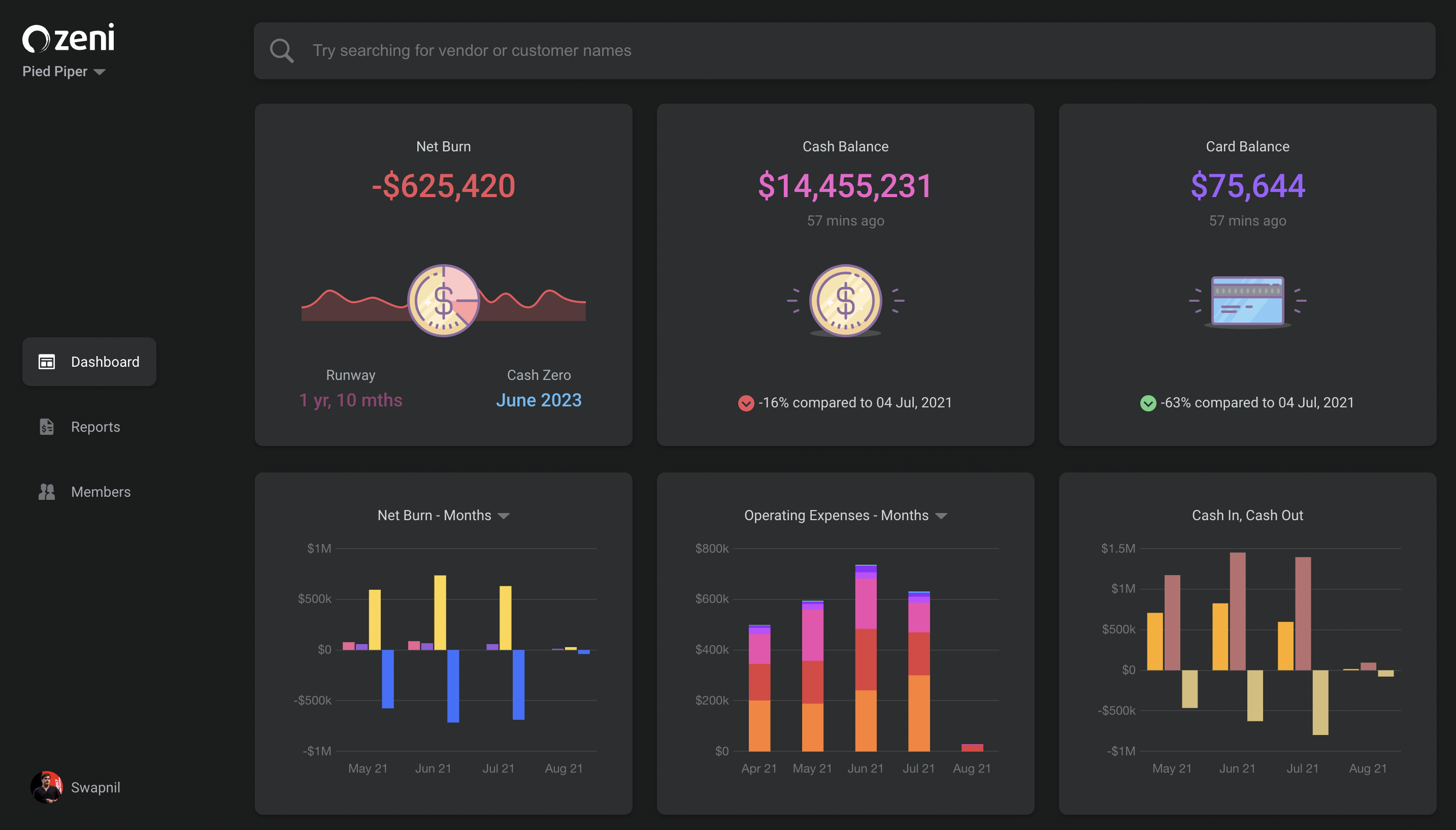
AI agents plus a dedicated human finance team. Built for startups with investor reporting, burn rate, and runway tracking.
Pros
- AI + human hybrid model means you get both automation speed and human judgment on complex items.
- Startup-specific metrics baked in: burn rate, runway, investor-ready reporting, all in real-time.
- AI saves approximately 70 hours per month on routine bookkeeping tasks per their published data.
- 4.7/5 rating on G2 from 65+ reviews, among the highest in the AI bookkeeping category.
Cons
- Starting at $494/month (annual), it is the most expensive option on this list by a wide margin.
- 1-2 week onboarding period before you see results. Not instant.
- English-only document processing. No support for non-English invoices or receipts.
- Bundled pricing makes it hard to pay for only the features you actually need.
$129/mo
GPT-4 powered bookkeeping automation that logs into your clients' QBO or Xero accounts daily.
Pros
- Logs into QBO/Xero daily and auto-categorizes bank feeds without manual intervention.
- GPT-4 powered categorization that processes transactions 80% faster than manual entry.
- Built specifically for multi-client management with white-label options for accounting firms.
- Learning system that improves accuracy over time based on your corrections and business patterns.
Cons
- At $129/month per business, costs add up fast for firms managing 10+ clients.
- Very small team (5 employees) and limited funding ($300K) raises durability questions.
- Only integrates with QBO, Xero, and Zoho Books. No standalone accounting capability.
- Not designed for business owners directly. The interface assumes bookkeeping expertise.
How to Choose
You want the most capable AI bookkeeping at a reasonable price.
Digits sorts, reconciles and reports with little oversight. At $65 a month for Essentials, it is the best mix of depth and cost.
You already use QuickBooks and want AI to speed things up.
Intuit Intelligence adds AI to the platform you already know. No migration. Your accountant almost certainly works in QuickBooks too.
You need bookkeeping software and have almost no budget.
Zoho Books runs real double-entry accounting at $0 under $50,000 in revenue, with invoices, journals, 1099 filing and 50 or more reports. You import statements to reconcile. Automatic bank feeds start at $15 a month.
You are a freelancer who mostly needs invoicing and receipt tracking.
FreshBooks is built for service work. Time tracking, receipts and client invoices work on day one. The AI is basic, and it covers what freelancers need.
You run a restaurant, hotel, or multi-location business.
Docyt knows hospitality. It links 40 or more POS systems and untangles messy revenue. It sorts 80 percent of transactions at full confidence, which general tools cannot match here.
You have VC funding and need startup-specific financial reporting.
Zeni pairs AI agents with a real finance team, so you get live burn rate, runway and investor reports. Budget above the sticker. Zeni needs QuickBooks Online Plus to sync, another $140 a month on top of the $494.
You are a bookkeeper managing multiple client accounts.
Booke.ai signs into your clients QBO or Xero accounts daily. It sorts the feeds and flags what needs a look. Built for many books at once.
You want AI-first bookkeeping but need monthly costs under $50.
At $35 a month, this is the cheapest AI-first tool we found. It runs ChatGPT and Claude for sorting. Paula, its assistant, answers questions.
How We Picked
We started with 11 AI bookkeeping platforms and cut three. Dext is a receipt capture tool, not a bookkeeping platform. Mercury is a business checking provider with minor bookkeeping features bolted on. And Bench went dark on 27 December 2024. Roughly 35,000 customers lost their records days before tax season, so it is a warning rather than an option. We cover it under What to Avoid.
For the remaining 8, we scored on four criteria:
| Criteria | Weight | What we measured |
|---|---|---|
| AI automation depth | 35% | How much the AI handles with no human sign off. There is a real gap between a tool that posts transactions and one that lines them up for you to click. |
| Pricing and value | 25% | Total cost relative to what you actually get. A $494/month tool that includes a human finance team is a completely different value proposition than a $65/month pure-software product. |
| Integrations | 20% | Bank connections, payment processor support, and whether the tool plays nice with your existing accounting setup or forces you to start over. |
| User reviews | 20% | Aggregated from G2, Capterra, Trustpilot, Reddit, and BBB complaints. Marketing pages hide recurring problems; review data doesn't. |
We did not receive free accounts, early access, or compensation from any tool on this list. Three of the eight (Digits, Bookeeping.ai, and Booke.ai) have no affiliate relationship with StartupOwl. They earned their spot.
Who Needs This
Spending more than five hours a month on the books? Then AI bookkeeping will save you real time. That bar is low. If you run 100 transactions a month across two or three accounts, you are already past it.
You can skip it if you are a solo freelancer with one account and fewer than 20 transactions a month. A spreadsheet is fine. The AI starts to pay for itself when volume, extra accounts or receipt chasing turn into a weekly chore.
Three kinds of business gain the most. Startups burning cash need to see the numbers today, not a report from last month. Restaurants, retail and hotels juggle revenue from several POS systems, which is where manual work breaks down. And growing firms who have outgrown the spreadsheet get to clean books faster than they would by learning QuickBooks from scratch.
One expectation to set. AI bookkeeping does not replace your accountant. It does the data entry, the sorting and the reconciling that eat their billable hours. Your CPA still handles tax strategy, compliance and the calls software cannot make. You get a smaller bill and fewer errors, not a bill of zero.
In-Depth Comparison
The biggest difference between these 8 tools isn't features. It's how they use AI.
AI-native vs. AI-added
Five of these tools were built around AI from the start. The whole design assumes software does the bulk of the work. The other three bolted AI onto traditional accounting software. Both can work. They feel nothing alike in daily use.
Pricing tells you who each tool serves
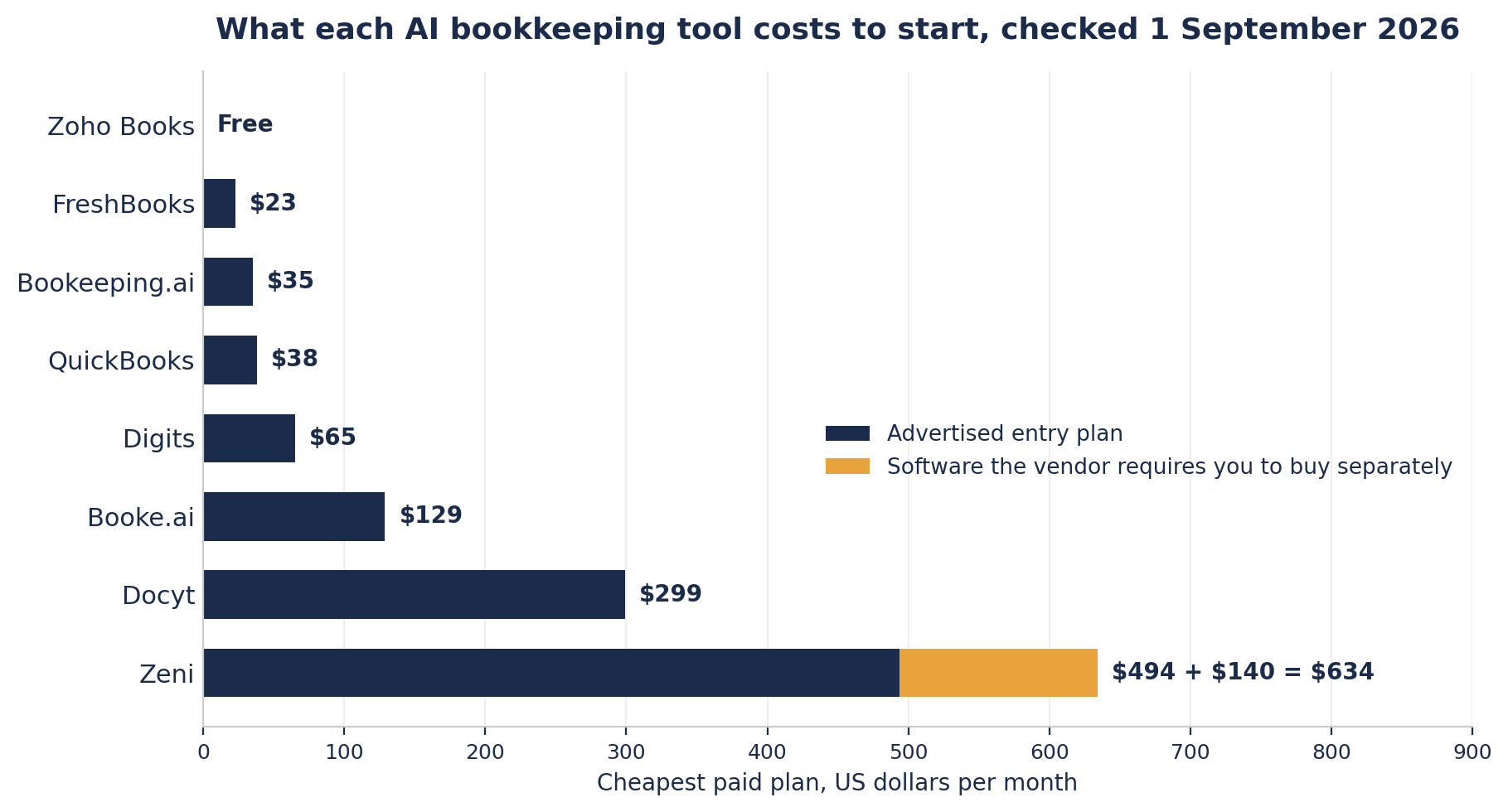
Three of these eight prices moved since this page was last checked, which is why the date on the chart matters more than the numbers on it.
| Tier | Monthly cost | Tools | Best for |
|---|---|---|---|
| Budget | $0 to $38/mo | Zoho Books (free), FreshBooks ($23), Bookeeping.ai ($35), QuickBooks ($38) | Solopreneurs and micro businesses |
| Mid-range | $65 to $129/mo | Digits ($65), Booke.ai ($129, needs QBO or Xero) | Growing SMBs wanting solid AI without paying for humans |
| Premium | $299 to $719/mo | Docyt ($299), Zeni ($494 to $719, plus QBO Plus) | Businesses where bookkeeping errors cost more than the subscription |
Integrations matter more than most people realize
Already on QuickBooks? Booke.ai plugs into your QBO account and works the feeds daily. Zoho shops get Zoho Books, which talks to 50 or more Zoho products out of the box. Digits reaches more than 12,000 banks through Plaid. The worst outcome is a tool that cannot reach your bank or your payment processor.
What to Avoid
Some tools call a lookup table AI. Matching a vendor name to a category is not AI. Real AI learns from patterns, copes with unclear transactions and improves with use. Ask the vendor one question. Does it decide on transactions it has never seen?
Bench took its site down on 27 December 2024 with no warning. Roughly 35,000 customers lost access days before tax season. Employer.com bought it three days later and folded it into Mainstreet in August 2025, so it ended better than it looked. That is the point. Nobody knew a buyer was coming. Anyone without an export was betting their books on a stranger's deal closing. Test yours first. Can you pull a clean CSV or QBO file today, alone, without asking support?
Bookeeping.ai and Digits both advertise 30-day trials. Zoho Books has a free plan that stays free. Watch the ones that want your card first and then bury the cancel button. That tells you how they treat customers later.
Zeni's $494 plan includes a finance team. It also needs QuickBooks Online Plus to sync, so the real floor is $634. Three people doing $15K a month need neither. Digits at $65 or Bookeeping.ai at $35 covers that volume, with no staff to pay and nothing underneath. Move up when your transactions get genuinely messy.
Alternatives Worth Considering
If none of the 8 tools above fit your situation, a few alternatives are worth knowing about.
Free bookkeeping, no real AI. Fine for a solo freelancer under 20 transactions a month, covering invoices and expenses. Its Trustpilot score of 1.2 out of 5 is a serious warning, especially on payments.
If you process fewer than 50 transactions a month and your bookkeeper handles everything already, adding AI creates complexity without proportional benefit. Sometimes the old way still works.
Not a standalone bookkeeping tool, but if you already bank with Mercury, the built-in AI categorization can reduce how much work your separate accounting software needs to do.
Our Methodology
We evaluated 11 AI bookkeeping platforms across four weighted criteria.
How much the AI does alone, with no sign off and no manual rules. We drew a hard line here. Some tools decide, like Digits and Docyt. Others suggest and wait for you, like QuickBooks and FreshBooks.
Assessed total cost of ownership, not just headline rates. Zeni's $494/month includes a human finance team. Digits' $65/month is pure software. Zoho Books is free up to $50K/year in revenue. Fundamentally different products at fundamentally different price points.
Checked bank connections, payment processor support, and whether the tool works with existing accounting setups or forces a complete migration.
Pulled from G2, Capterra, Trustpilot, Reddit and BBB complaints. Good features do not cancel a pattern. Repeated complaints about billing, data access or support cost a tool points.
Frequently Asked Questions
About the Author
Editor, StartupOwl
Eliot leads StartupOwl's state data research. He maintains the site's fifty state records of LLC filing fees, annual costs, processing times, and small business grant programs, checking each figure against the state office that publishes it and logging the date it was verified. Based in New Jersey, he has spent his working life in and around small businesses, and he writes for the founder who wants the real number rather than the advertised one. Every figure under his byline traces to a named source, and when a state proves a number wrong, the correction is published, not buried.
Was this article helpful?
Affiliate Disclosure: StartupOwl earns a commission when you click certain links on this page, at no extra cost to you. This does not influence our rankings or recommendations. Three tools on this list (Digits, Bookeeping.ai, and Booke.ai) have no affiliate relationship with us. We included them because they earned their place. Our editorial team independently researches and evaluates every product. Read our editorial policy for full details.
Financial Disclaimer: This content is for informational purposes only and does not constitute financial or accounting advice. Consult a qualified CPA or bookkeeper for guidance specific to your business situation. Every price on this page was read from the vendor's own pricing page on 1 September 2026 and may change.
Mercury disclosure. Mercury is a fintech company, not an FDIC-insured bank. Banking services provided through Choice Financial Group and Column N.A., Members FDIC.
Sources & References
- Digits pricing and plans
- QuickBooks Online pricing
- Zoho Books pricing
- Zoho Books AI in accounting
- Bookeeping.ai pricing
- FreshBooks pricing
- Zeni pricing and plans
- Docyt pricing
- Booke.ai pricing
- Accounting Today, Bench acquired by Employer.com after sudden shutdown
- Google, creating helpful content
- Digits Crunchbase profile
- Zeni Crunchbase profile
- Docyt Crunchbase profile
Questions about Best AI Bookkeeping Tools for Small Business
No comments yet. Ask the first question and a member of our team will answer.
Leave a comment