
Turn Your Hobby Into a Business
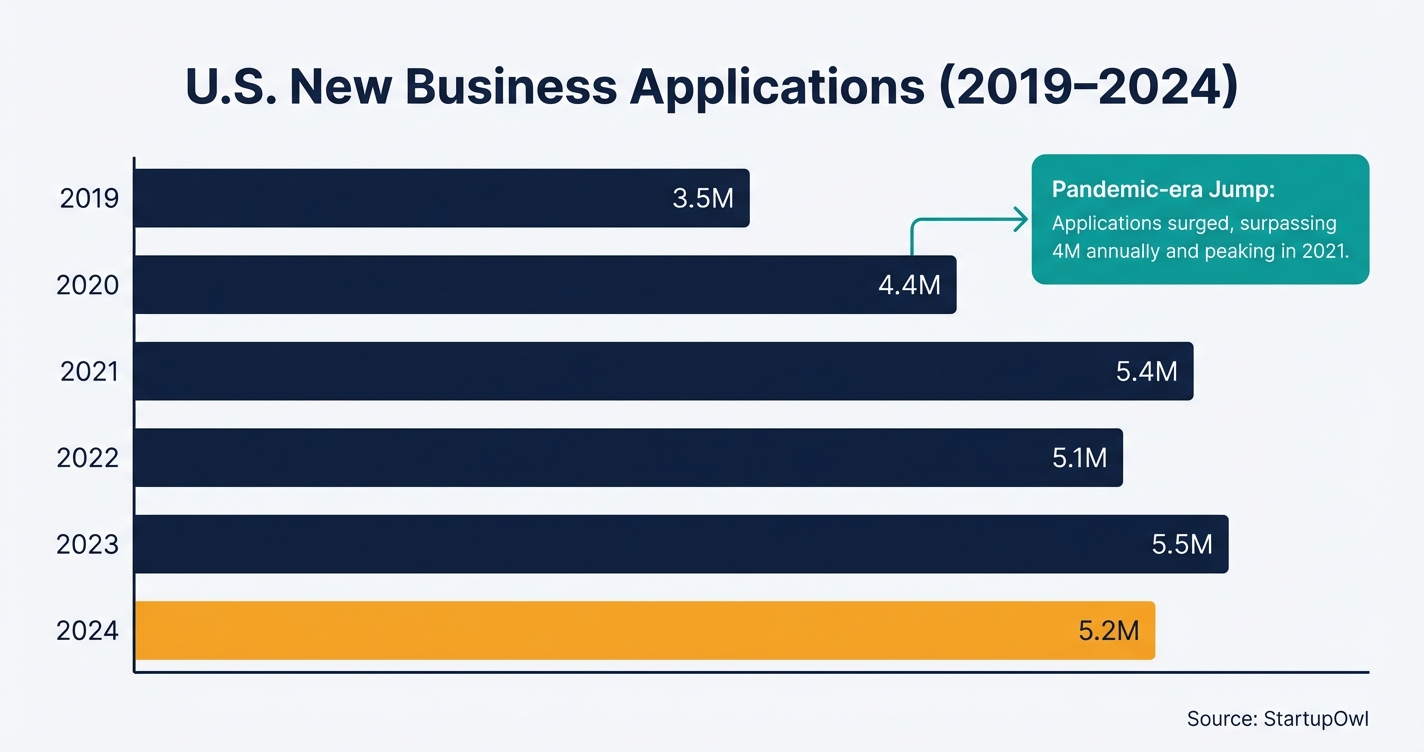
Turn your hobby into a business with this step-by-step guide. Over 5.2 million new business applications were filed in 2024. Learn IRS rules, LLC setup, and tools.

StartupOwl may earn a commission when you use links on this page to sign up for business tools or services. This does not affect our editorial recommendations. All opinions are our own.
If you are earning money from something you love, you already have the hardest part figured out: proof that someone will pay for what you make or do. The next step is turning that income stream into a legitimate, tax-efficient business that protects your personal assets and unlocks deductions you cannot claim as a hobbyist.
Why the Hobby-to-Business Line Matters More Than You Think
The IRS draws a hard line between hobbies and businesses, and it affects every dollar you earn. If the IRS classifies your activity as a hobby, you must still report the income, but you cannot deduct any expenses against it (as of tax years 2018 through 2026, per the Tax Cuts and Jobs Act).
Classify it as a business, and you can deduct materials, equipment, home office costs, mileage, and more on Schedule C. You will also owe 15.3% self-employment tax on net earnings (12.4% Social Security plus 2.9% Medicare, per IRS.gov), but the deductions typically more than offset the added tax obligation for anyone running a real operation.
The IRS uses a safe harbor rule: if your activity generates a profit in at least 3 out of 5 consecutive years, it is presumed to be a business. But failing that test does not automatically make you a hobby. The IRS weighs nine factors, including your recordkeeping, time invested, and whether you adjust methods to improve profitability.
How to Turn Your Hobby Into a Business (Step by Step)
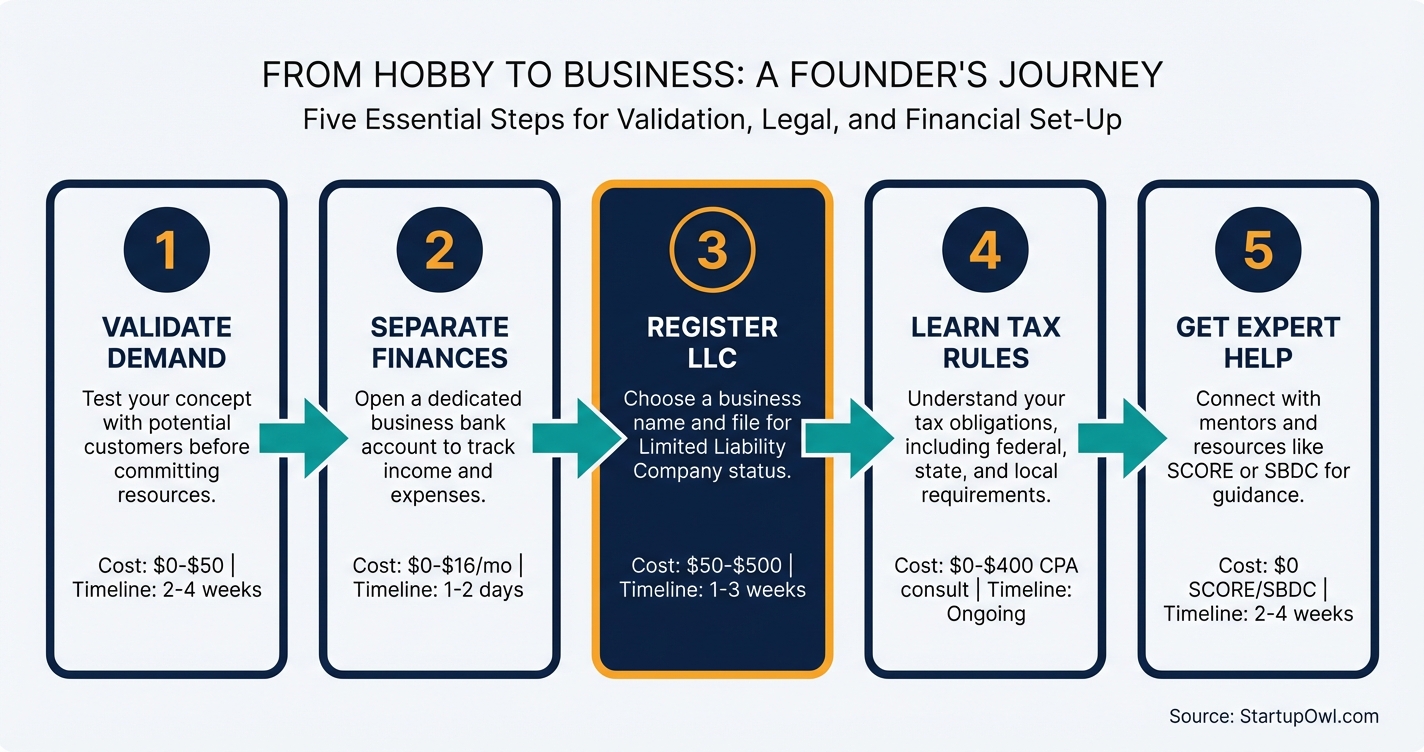
Follow these five steps to make the transition from casual seller to legitimate business owner. Each step includes real costs, timelines, and links to tools that will save you time.
Step 1. Validate That People Will Pay
Before spending money on an LLC or website, sell your product or service to 10 real customers outside your friends-and-family circle. Platforms like Etsy (with 8.1 million active sellers as of 2024, per Etsy's public filings) make it easy to test demand at minimal cost. Listing fees are just $0.20 per item.
Track every transaction from the start. This habit proves profit intent to the IRS and gives you real data for pricing decisions. If you need solopreneur business ideas, start with what people are already asking you to make.
Step 2. Separate Your Finances
Open a dedicated business bank account the week you make your first sale. The IRS evaluates whether you run your activity "in a businesslike manner," and commingled finances are one of the fastest ways to trigger hobby classification.
Connect your new account to accounting software like QuickBooks Self-Employed (starting at $15/month) or Wave (free). Automated tracking saves hours at tax time and gives you a clear picture of profitability each month.
Step 3. Choose a Legal Structure and Register
Most hobby-to-business founders either operate as a sole proprietorship (no filing required) or form an LLC for liability protection. State LLC filing fees range from $50 to $500. Read our sole proprietorship vs LLC comparison if you are unsure which is right for you.
After registering, get a free EIN (Employer Identification Number) from IRS.gov. You will need it for your business bank account, tax filings, and hiring contractors. If you want help with the paperwork, check our list of LLC formation services.
Step 4. Understand the Tax Rules
Business income is reported on Schedule C (Form 1040) and is subject to 15.3% self-employment tax on net earnings, per the IRS. If you expect to owe $1,000 or more in taxes for the year, you must make quarterly estimated payments using Form 1040-ES to avoid penalties.
Set aside 25% to 30% of every payment you receive in a separate savings account earmarked for taxes. Consult a CPA before your first tax filing to confirm your classification and identify all deductions available to you. Avoid common first-time founder mistakes by planning for taxes from the start.
Step 5. Get Free Expert Help and Build Systems
SCORE offers free mentoring through a network of over 11,000 volunteer business experts, and according to SCORE, 87% of entrepreneurs with a mentor are still in business after one year. Your local Small Business Development Center (SBDC) provides free one-on-one advising and low-cost workshops.
Build a simple website, create a small business marketing plan, and explore startup funding options once you have a track record of sales. If you are transitioning from a side hustle to a business, these systems are what make the difference between burnout and sustainable growth.
Best Tools for Hobby-to-Business Founders
You do not need expensive software to get started. These four tools cover the essentials for under $50/month combined.
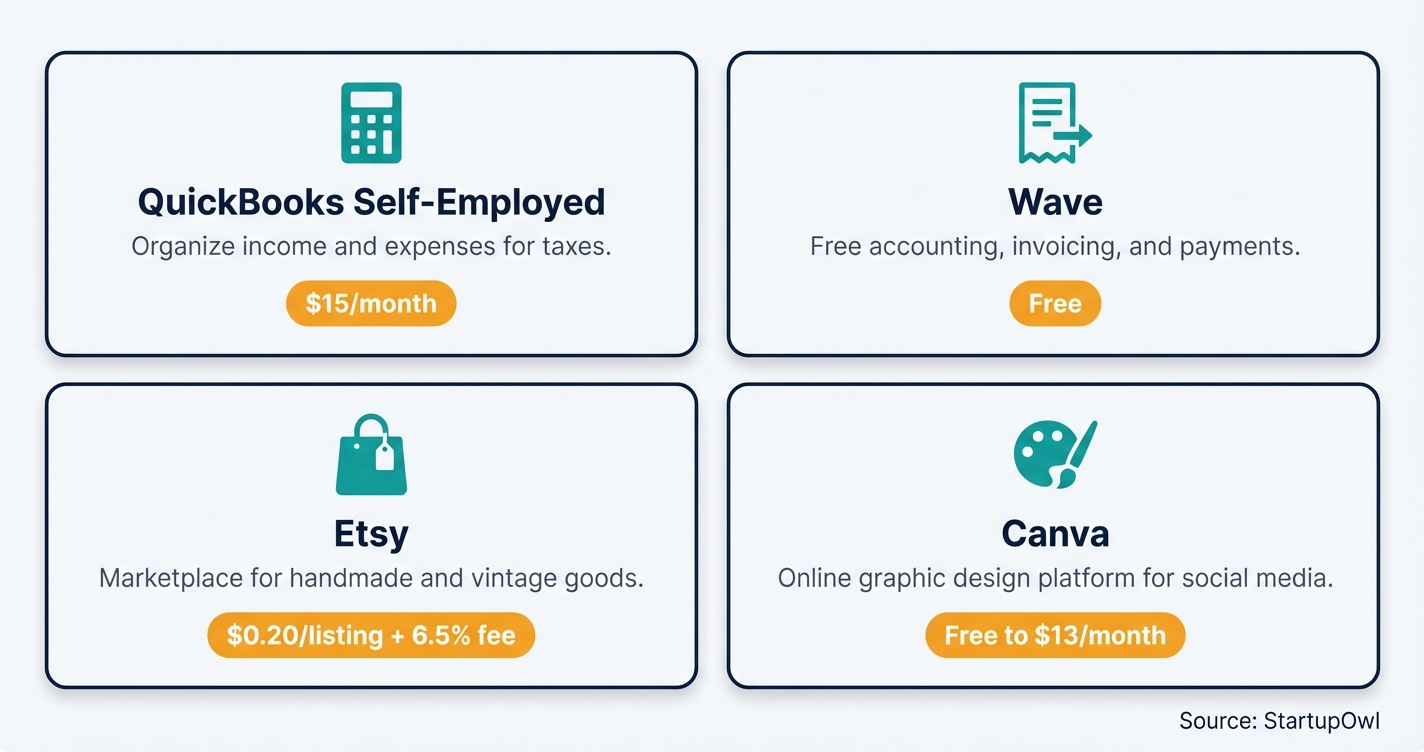
- QuickBooks Self-Employed ($15/month) tracks income, expenses, and mileage automatically. It separates personal and business transactions and estimates quarterly taxes for you.
- Wave (free) is a solid alternative if you want zero-cost invoicing and accounting. It handles unlimited income and expense tracking with no monthly fee.
- Etsy ($0.20/listing + 6.5% transaction fee) gives you immediate access to over 90 million active buyers. It is the lowest-risk way to test product-market fit for handmade or vintage goods.
- Canva (free to $13/month) lets you create professional product photos, social media posts, and packaging labels without a design background.
For a more complete toolkit, see our legal services page and our guide to building a brand on a budget.
5 Mistakes That Keep Hobbies From Becoming Businesses
These are the errors that trip up most hobby-to-business founders, and each one has real financial consequences.
- Mixing personal and business money. The IRS views commingled finances as evidence that you are not operating a real business. Open a separate bank account before your second sale.
- Ignoring the hobby loss rule. If your activity loses money in 3 or more of the last 5 years, the IRS may reclassify your business as a hobby and disallow all expense deductions retroactively. Document every step you take to improve profitability.
- Pricing too low. Many hobbyists undercharge because they compare to mass-produced alternatives. Your handmade or custom product should account for materials, labor (pay yourself at least $20/hour), platform fees, and shipping.
- Skipping quarterly estimated taxes. If you owe $1,000 or more in taxes for the year, the IRS expects quarterly payments (due in April, June, September, and January). Missing them triggers underpayment penalties.
- Never writing a business plan. You do not need a 40-page document. A one-page plan with revenue targets, expense estimates, and a growth timeline is enough to demonstrate profit motive to the IRS and guide your decisions. Use our free business plan template to get started.
What to Do This Week
You do not need to quit your job or invest thousands to turn your hobby into a business. Start by opening a free business bank account, tracking your next 10 sales, and reading the IRS hobby vs. business guide.
Then form an LLC to protect your personal assets, request a free SCORE mentor, and set aside 30% of every payment for taxes. If you want to explore what kind of business fits your skills, read our Solopreneur Guide and browse small business grants to see if you qualify for free funding.
Step-by-Step Process
- 1
Validate that people will pay for your hobby
Before you invest in anything, prove demand. Sell your product or service to 10 real customers outside your friends-and-family circle.
Use platforms like Etsy (which had 8.1 million active sellers in 2024) or a simple Shopify store to test pricing and collect feedback. Track every sale and expense from day one.
Tips
- Price your product at least 3x your materials cost to leave room for fees and shipping.
- Ask early customers what they would change before you scale production.
Common Mistakes
- Giving away products for free and assuming that counts as market validation.
- Spending months perfecting the product before making a single sale.
- 2
Separate hobby income from personal finances
Open a business bank account to keep every dollar of revenue and expenses trackable. The IRS looks at whether you run your activity "in a businesslike manner," and commingled finances are a red flag.
Connect your bank account to accounting software like QuickBooks or Wave to automate categorization from the start.
Tips
- Choose a bank with no minimum balance requirement so you can start lean.
- Save at least 25% to 30% of every payment for taxes.
Common Mistakes
- Depositing business revenue into your personal checking account.
- Waiting until tax season to organize receipts and income records.
- 3
Choose a legal structure and register your business
Most hobby-to-business founders start as a sole proprietorship (zero paperwork) or form an LLC for personal liability protection. An LLC separates your personal assets from business debts and typically costs $50 to $500 in state filing fees.
Read our sole proprietorship vs LLC comparison to decide which structure fits your risk level. If you are unsure, consult a CPA or business attorney before filing.
Tips
- File for an EIN (Employer Identification Number) for free at IRS.gov even if you have no employees.
- Check your state's annual report requirements so you stay in compliance.
Common Mistakes
- Skipping the LLC because you think your hobby is 'too small' for liability protection.
- Forgetting to register a DBA (Doing Business As) if you use a name different from your legal name.
- 4
Understand the IRS hobby vs. business rules
The IRS uses a 3-of-5-year profit rule as a safe harbor: if your activity shows a profit in at least 3 out of 5 consecutive years, the IRS presumes you are operating a business. Failing this test does not automatically make you a hobby, but it increases scrutiny.
Business income is reported on Schedule C and is subject to 15.3% self-employment tax (12.4% Social Security plus 2.9% Medicare as of 2026). However, you can deduct business expenses, which hobby income cannot. Consult a tax professional to determine the best classification for your situation.
$0 (understanding the rules is free; a CPA consultation runs $150 to $400) Ongoing (review annually at tax time) IRS.govTips
- Keep a written business plan and update it annually to document profit intent.
- Track your hours spent on the activity to demonstrate effort toward profitability.
Common Mistakes
- Claiming large losses year after year without documenting corrective steps.
- Failing to file quarterly estimated tax payments and getting hit with IRS penalties.
- 5
Build systems for growth and get help
Once you are generating consistent revenue, invest in systems. Set up a simple website, create a small business marketing plan, and use AI tools for small business to handle repetitive tasks.
Take advantage of free mentoring through SCORE (11,000 volunteer mentors nationwide) and your local Small Business Development Center (SBDC), which offers free one-on-one advising. According to SCORE, 87% of entrepreneurs with a mentor are still in business after one year.
$0 for SCORE and SBDC; $12 to $50/month for website and tools 2 to 4 weeks to set up core systems SCORETips
- Request a SCORE mentor who has experience in your specific industry.
- Attend at least one SBDC workshop on business finance before applying for any loan.
Common Mistakes
- Trying to do everything yourself instead of using free expert resources.
- Spending too much on a website before you have reliable monthly revenue.
Frequently Asked Questions
There is no specific dollar threshold. The IRS looks at your profit motive, not a dollar amount. If you earn over $400 in net self-employment income, you must file Schedule SE and pay self-employment tax. The key question is whether you operate with the intent to make a profit, as determined by nine IRS factors including recordkeeping, time invested, and history of profits.
The IRS safe harbor rule presumes your activity is a business if it shows a profit in at least 3 out of 5 consecutive tax years. Failing this test does not automatically make you a hobby. The IRS weighs additional factors like your bookkeeping practices, expertise, and efforts to improve profitability. Consult a CPA if your business has not yet turned a profit.
No, you can sell as a sole proprietor with no formal registration. However, an LLC provides personal liability protection (keeping your personal assets separate from business debts) and costs $50 to $500 in state filing fees. Most hobby-to-business founders benefit from forming an LLC once they start generating consistent monthly revenue. See our sole proprietorship vs LLC guide for details.
Not if the IRS classifies your activity as a hobby. As of tax years 2018 through 2026, hobby expenses are not deductible due to the suspension of miscellaneous itemized deductions under the Tax Cuts and Jobs Act. If your activity qualifies as a business, you can deduct ordinary and necessary expenses on Schedule C, including materials, home office costs, and equipment.
Report your business income and expenses on Schedule C (Form 1040). You will owe 15.3% self-employment tax on net earnings, plus regular income tax. Make quarterly estimated payments using Form 1040-ES if you expect to owe $1,000 or more for the year. You can deduct half of your self-employment tax as an adjustment to income on your 1040.
Etsy is the most popular starting point, with over 90 million active buyers as of 2024. Listing fees are just $0.20 per item. Shopify (starting at $39/month) gives you more control over branding and customer data. For services like photography or tutoring, a simple website with a booking tool like Calendly works well.
The information on this page is for educational purposes only and does not constitute financial, legal, or investment advice. Loan terms, interest rates, and eligibility requirements vary by lender and change frequently. Always consult with a qualified financial advisor before making funding decisions. StartupOwl may earn a commission if you click our links at no extra cost to you.
Sources & References
- U.S. Census Bureau Business Formation Statistics
- IRS Tax Tip 2024-55: Hobby or Business
- IRS: Self-Employment Tax (Social Security and Medicare Taxes)
- IRS: Know the Difference Between a Hobby and a Business
- SBA: Record 20 Million Business Applications Filed (November 2024)
- SBA Office of Advocacy: 2024 Small Business Profile
- SCORE: Find a Mentor
- SBA: Small Business Development Centers
- Commerce Institute: New Businesses Started Every Year (2024 Data)
- SBA: Grow Your Business Through Mentorship
About the Author
Editor, StartupOwl
Eliot leads StartupOwl's state data research. He maintains the site's fifty state records of LLC filing fees, annual costs, processing times, and small business grant programs, checking each figure against the state office that publishes it and logging the date it was verified. Based in New Jersey, he has spent his working life in and around small businesses, and he writes for the founder who wants the real number rather than the advertised one. Every figure under his byline traces to a named source, and when a state proves a number wrong, the correction is published, not buried.
Was this article helpful?
Questions about Turn Your Hobby Into a Business
No comments yet. Ask the first question and a member of our team will answer.
Leave a comment