
Creator Economy Business Guide
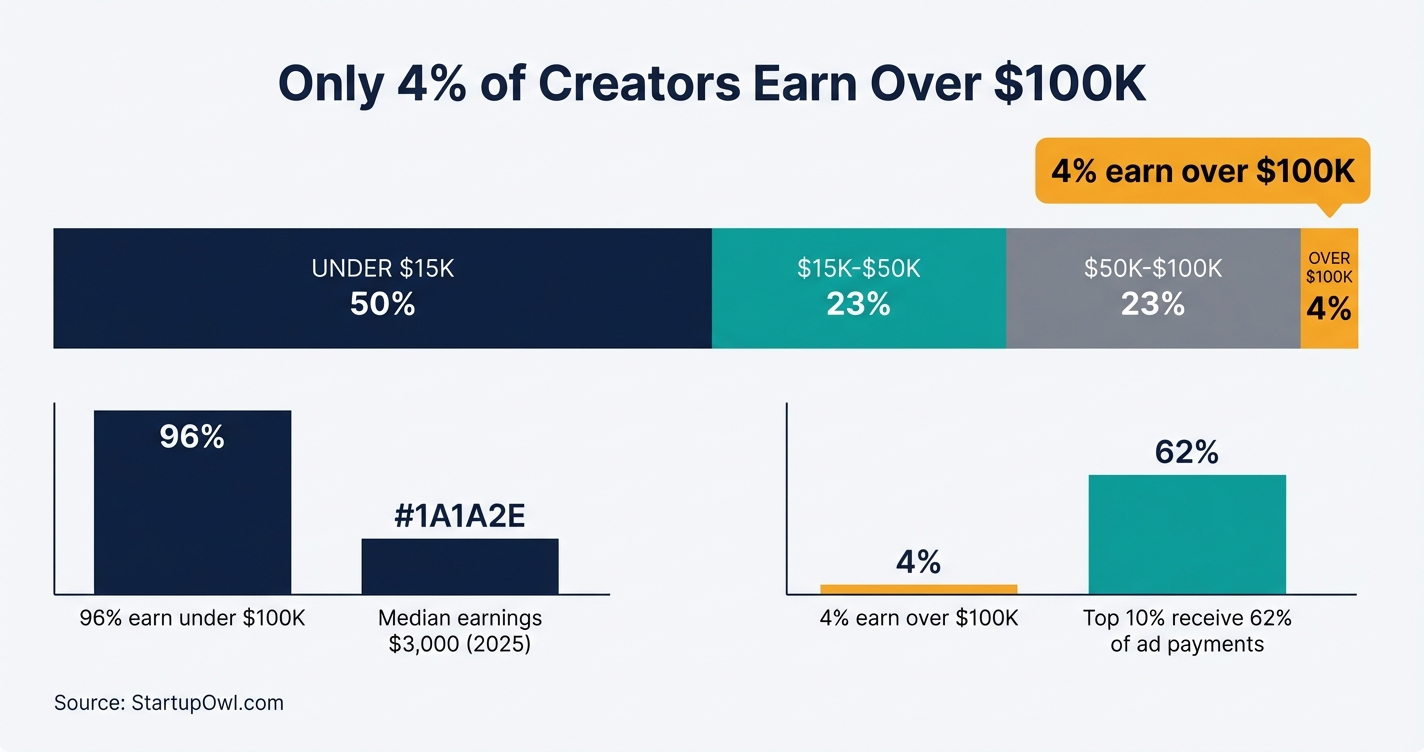
162 million Americans identify as creators, but only 4% earn over $100K. Learn how to register, fund, and grow a creator business with this step-by-step guide.

In This Article
- Key Takeaways
- Step-by-Step
- Why Creators Have a Genuine Business Advantage
- The Real Challenges Creators Face as Business Owners
- How to Set Up Your Creator Business Step by Step
- Programs and Organizations That Help Creators Build Businesses
- Tax and Legal Decisions Every Creator Must Make
- The Best Tools for Running a Creator Business
- What to Do This Week to Legitimize Your Creator Business
- FAQ
Yet only 4% of creators earn more than $100,000 per year, and more than half of full-time creators make under $15,000 annually, per Business Insider data (2026). If you are ready to stop treating your content like a hobby and start running it like a company, this guide covers every step from LLC formation to tax strategy.
Why Creators Have a Genuine Business Advantage
You already own the single most expensive thing traditional founders have to buy: an audience. Every follower, subscriber, and email address is a direct relationship with a potential customer, and you did not have to spend a dime on paid acquisition to get it.
Creators who actively diversify their revenue streams see dramatic financial results. According to a 2026 Cookie Finance report, creators with 3 or more revenue streams earn an average of $75,000 more per year than those relying on a single source. Six-figure creators typically maintain 5 or more income streams, per SimpleBeen (2026).
Nearly 47% of creators now identify as full-time professionals, according to DemandSage (2026). That number has climbed steadily since 2020, and it means the infrastructure for running a creator business (from banking to tax tools to membership platforms) has matured alongside the workforce.
Brand partnerships account for roughly 70% of total creator income, per Business Insider (2026). If you have an engaged audience, brands will pay you. An LLC and a professional business setup make you significantly more attractive to enterprise sponsors who require W-9s and formal contracts.
The Real Challenges Creators Face as Business Owners
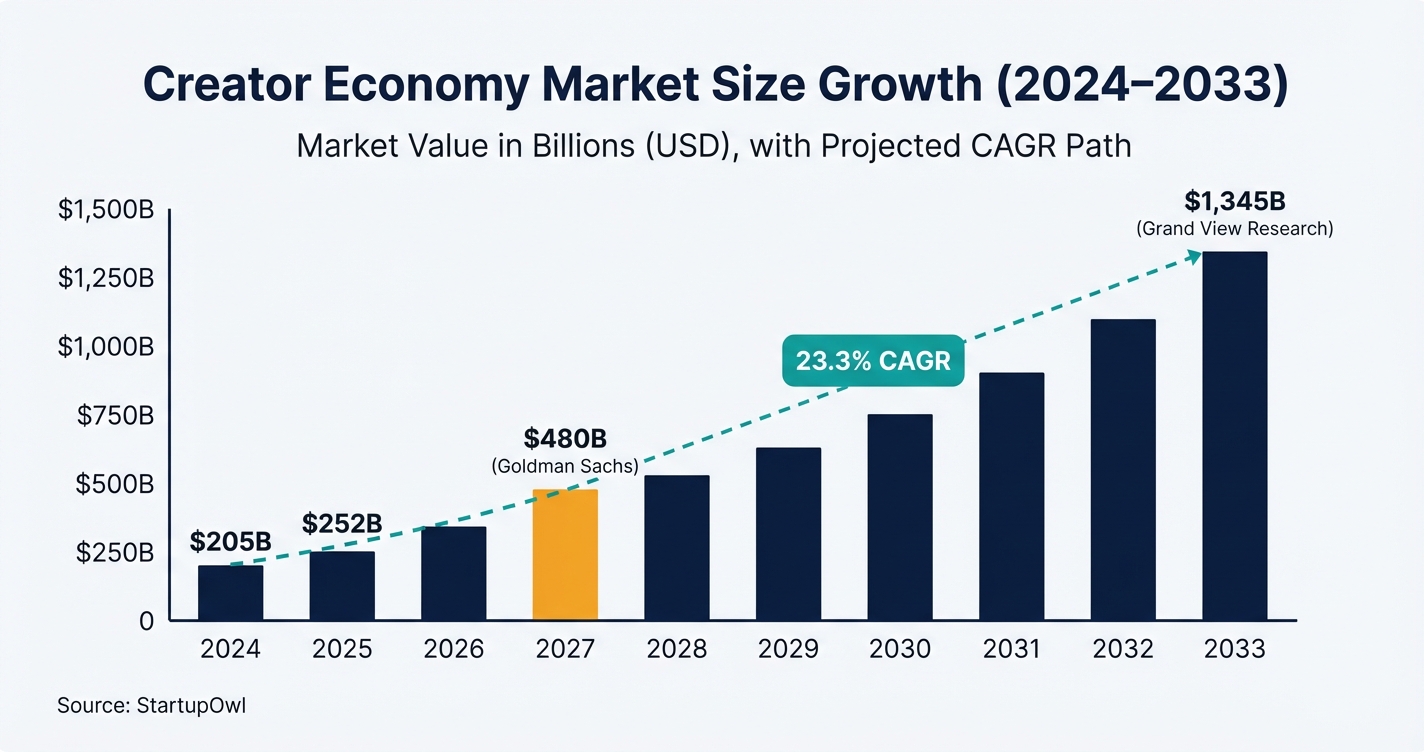
The income gap in the creator economy is severe. While the overall market exceeds $205 billion, the top 10% of creators received 62% of ad payments in 2026 (up from 53% in 2023), according to Business Insider data. Meanwhile, median creator earnings actually declined from $3,500 to $3,000 in the same period.
Platform dependency is the single biggest structural risk you face. If 70% of your income comes from brand deals brokered through one platform, a single algorithm change can cut your revenue overnight. Building owned channels (email, your own website, a membership community) is not optional.
Burnout is documented and widespread. According to SimpleBeen (2026), 63% of full-time creators experienced burnout in the past year, and more than 45% cite pressure to be active on multiple platforms as a key cause. Read our entrepreneur burnout guide for strategies that work.
Financial literacy gaps compound these problems. H&R Block's Andy Phillips noted at a 2026 tax event that "7 in 10 creators say finances are their biggest business concern, and a quarter say taxes are their biggest source of stress." Most creators begin as W-2 employees and never learn quarterly filing, self-employment tax, or bookkeeping before they need it.
How to Set Up Your Creator Business Step by Step
The steps below turn your content operation into a legally protected, tax-efficient business. You do not need a lawyer for most of this, but you do need to follow the order carefully.
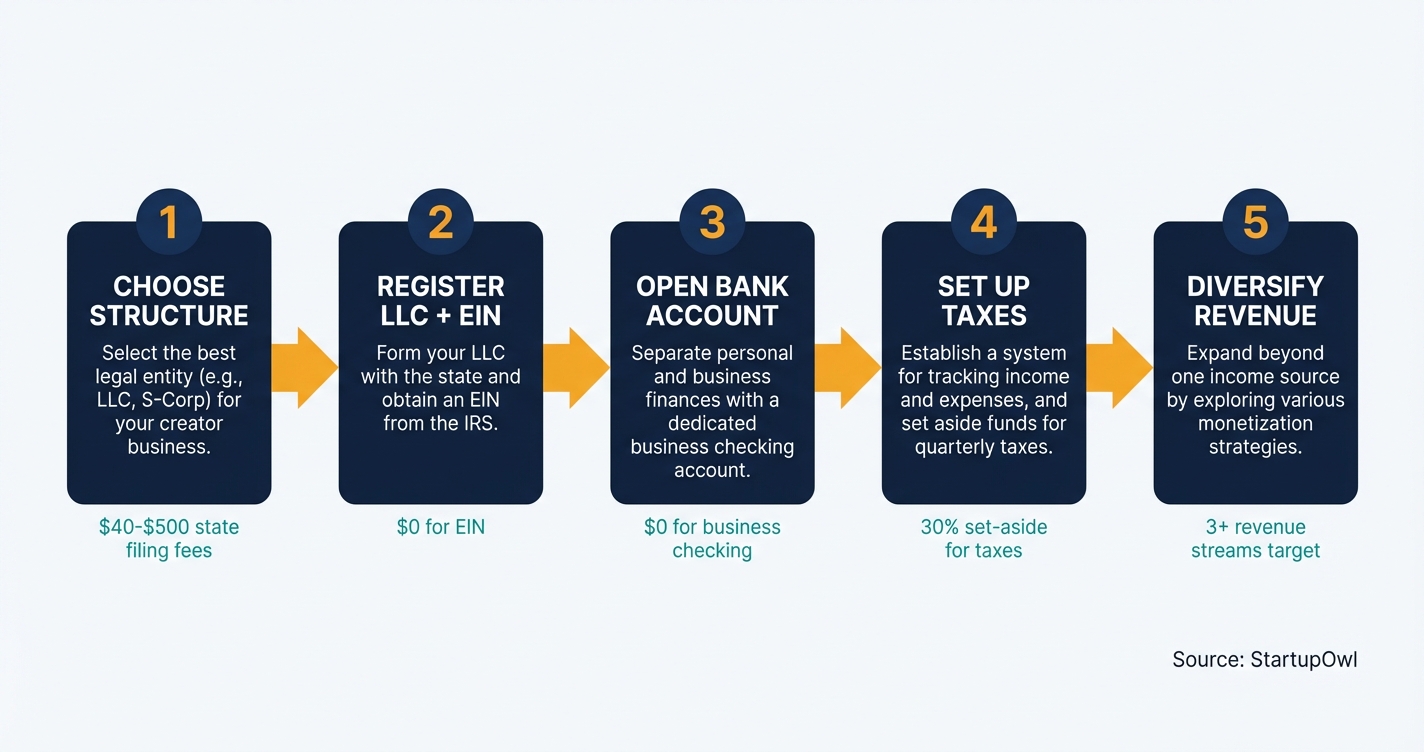
Step 1. Choose your business structure. Most creators should form an LLC. It protects your personal assets (savings, car, home) if someone sues your business. An LLC is treated as a pass-through entity for taxes unless you elect otherwise. Compare structures in our sole proprietorship vs LLC guide.
Step 2. Register your LLC and get an EIN. File Articles of Organization with your state's Secretary of State. State filing fees range from $40 to $500, according to ZenBusiness (2026). Then get a free EIN from the IRS to separate your business identity from your Social Security Number.
Step 3. Open a business bank account. Never mix personal and business funds. Open a dedicated business bank account using your EIN and formation documents. This protects your LLC's liability shield and makes bookkeeping straightforward.
Step 4. Set up accounting and tax payments. You report creator income on Schedule C and owe 15.3% self-employment tax on net earnings, per IRS.gov. Set aside 30% of net income monthly and pay quarterly estimated taxes to avoid penalties. Use accounting software to automate tracking.
Step 5. Diversify your revenue. Build at least 3 income streams. If you are not sure where to start, explore solopreneur business ideas and our side hustle to business guide for models that work alongside content creation.
Programs and Organizations That Help Creators Build Businesses
SCORE is a free SBA-funded mentorship program with 10,000+ volunteer mentors across all 50 states. You get matched with an experienced business professional who helps you set up operations, financial systems, and growth strategy. Mentoring is free for the life of your business.
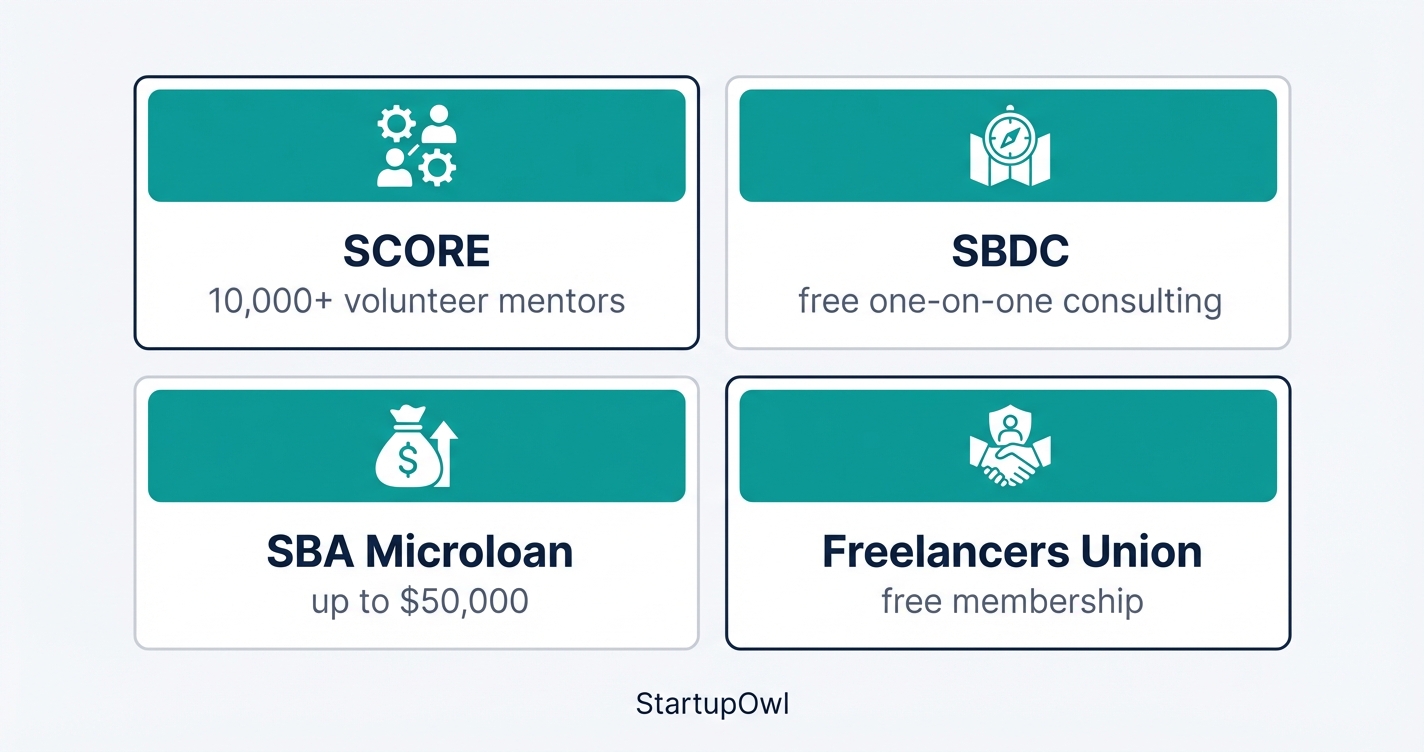
Your local Small Business Development Center (SBDC) provides free one-on-one consulting and workshops on topics like business planning, tax basics, and marketing. Enter your zip code at SBA.gov to find the nearest location.
SBA loan programs are available to self-employed creators who have an LLC. The SBA Microloan program lends up to $50,000 with interest rates between 8% and 13%, and the SBA 7(a) program offers up to $5 million for qualifying businesses. You will need an official business designation (like an LLC) to qualify. Learn more at our small business loan guide.
Platform-specific creator funds can supplement your income while you build. YouTube's Creator Fund pays bonuses of $100 to $10,000 per month for Shorts creators. Meta's Creator Monetization Suite integrates in-stream ads, Reels bonuses, and brand collaboration tools across Instagram and Facebook. Explore more options at small business grants.
The Freelancers Union offers free membership with access to group health insurance rates, legal clinics, and a national community of independent workers. It is one of the best support networks for creators who are technically self-employed.
Tax and Legal Decisions Every Creator Must Make
Your business structure affects how you file taxes. A single-member LLC files on Schedule C of your personal return, exactly like a sole proprietor. The LLC itself does not pay taxes separately unless you elect S-Corp status by filing IRS Form 2553.
The self-employment tax rate is 15.3% on net earnings (12.4% Social Security on the first $168,600 of earnings for 2026, plus 2.9% Medicare on all earnings), per the IRS. As a creator, you pay both the employer and employee portions because you have no employer splitting the cost with you.
If your net profit exceeds $100,000 per year, consider electing S-Corp status. This lets you pay yourself a reasonable salary (subject to payroll tax) and take remaining profits as distributions that are not subject to self-employment tax. H&R Block's Tax Institute notes that S-Corp elections require formal payroll processing, so the savings must justify the added compliance cost.
You must receive a Form 1099-NEC from every brand or platform that pays you $600 or more in a year. You are required to report all income, even amounts under the $600 threshold. Keep records of every payment and every deductible expense (equipment, software, travel, home office).
Consult a CPA who understands creator income before making entity or tax elections. Creator revenue comes from multiple sources (ads, sponsorships, affiliates, digital products, merchandise), and each can have different tax treatment. The IRS can classify your creator work as a hobby (disallowing deductions) if it consistently fails to show a profit in 3 of the last 5 years. For legal services, consider firms familiar with intellectual property and content licensing.
The Best Tools for Running a Creator Business
You do not need a dozen subscriptions to run your business properly. These four tools cover your core operational needs from formation through ongoing accounting.
- ZenBusiness handles LLC formation starting at $0 plus state fees. The Starter plan includes Articles of Organization filing, name availability search, and first-year compliance alerts. The Pro plan adds 1-day processing and an operating agreement template for $199. See our full list of LLC formation services.
- Mercury offers free business banking on its base plan with no minimum balance, no monthly fees, and integrations with accounting software. It is built for online businesses and processes ACH transfers quickly.
- QuickBooks Solopreneur starts at $20 per month and automatically separates business and personal expenses, tracks mileage, and estimates quarterly tax payments. Compare options in our accounting software guide.
- Patreon is a membership platform used by over 300,000 creators, with an estimated monthly payout of $24.5 million. Pricing is 8% to 12% of your monthly revenue depending on your plan tier.
What to Do This Week to Legitimize Your Creator Business
Start with the action that protects you the most: form your LLC. It takes 15 minutes to file online and costs as little as $40 in state fees. If you are not sure which structure is right, read our sole proprietorship vs LLC comparison.
Open a business bank account the day your LLC is approved. Deposit all creator income there from this point forward. This one step makes tax time easier and protects your LLC's liability shield.
Request a free mentor at SCORE.org. A mentor can review your revenue model, help you plan for taxes, and hold you accountable for business goals. It costs nothing and sessions can be virtual.
Finally, read our first-time founder mistakes guide and the solopreneur guide for the operational playbook that applies to every creator running a one-person company. If you want to learn about startup funding options, we have a full guide on that too.
Mercury disclosure
Step-by-Step Process
- 1
Decide on Your Business Structure
Most creators start as sole proprietors by default, but an LLC gives you personal liability protection if a brand deal goes sideways or someone sues over your content. An LLC is treated as a "disregarded entity" for tax purposes unless you elect S-Corp status, so it does not change your tax obligations on its own.
Tips
- Wyoming, Delaware, and New Mexico have low LLC filing fees and no state income tax or strong privacy protections.
- If your annual profit exceeds $100,000, talk to a CPA about electing S-Corp status to reduce self-employment tax.
Common Mistakes
- Operating without any business structure and exposing personal assets to lawsuits.
- Forming an LLC in a state where you have no business presence, which can trigger tax obligations in both states.
- 2
Register Your LLC and Get an EIN
File your Articles of Organization with your state's Secretary of State. You can do this yourself or use an LLC formation service. Then apply for a free Employer Identification Number (EIN) from the IRS at IRS.gov.
$0 to $199 for formation service plus $40 to $500 in state fees 1 to 10 business days for formation; EIN is issued instantly online IRS.govTips
- ZenBusiness offers a Starter plan at $0 plus state fees for LLC formation.
- Your EIN is required to open a business bank account and file business taxes.
Common Mistakes
- Skipping the EIN and using your personal Social Security Number on contracts and 1099s.
- Forgetting to file your operating agreement, which defines how you run your LLC.
- 3
Open a Separate Business Bank Account
Mixing personal and business funds can void the liability protection your LLC provides. Open a dedicated business checking account using your EIN and Articles of Organization. Many creator-friendly banking platforms like Mercury or Relay offer free business checking with no minimum balance.
Tips
- Route all brand deals, ad revenue, and sponsorship payments through your business account.
- Use accounting software connected to your business account to auto-categorize expenses.
Common Mistakes
- Using your personal checking account for business revenue, which weakens your LLC's legal protection.
- Not tracking deductible expenses like equipment, software subscriptions, and home office costs.
- 4
Set Up Your Tax and Accounting System
As a self-employed creator, you owe 15.3% in self-employment tax (Social Security and Medicare) on top of your income tax. The IRS expects quarterly estimated payments if you will owe $1,000 or more in taxes for the year. Set aside 30% of your net creator income each month to cover both federal income tax and self-employment tax.
$0 to $30 per month for accounting software Set up in 1 day; quarterly payments due April 15, June 15, September 15, January 15 IRS.govTips
- Use Schedule C to report creator income and deductions on your personal tax return.
- A SEP-IRA lets you contribute up to 25% of net self-employment income, reducing your current tax bill.
Common Mistakes
- Ignoring quarterly estimated tax payments and getting hit with IRS penalties at year end.
- Failing to track deductible expenses like camera equipment, editing software, travel, and internet costs.
- 5
Diversify Your Revenue Beyond One Platform
Creators with 3 or more revenue streams earn an average of $75,000 more per year than those relying on a single source, according to a 2026 Cookie Finance report. Brand deals account for about 70% of total creator income, but algorithm changes and platform policy shifts can wipe out that revenue overnight. Build owned assets like an email list, a membership community, digital products, and affiliate partnerships.
Varies ($0 for an email list to $49 per month for membership platforms) Ongoing; start within your first 90 days SBA.govTips
- Email subscribers are the one audience you own outright. Start building your list from day one.
- Affiliate commissions are the second-largest income source for U.S. creators, used by roughly 6 in 10.
Common Mistakes
- Relying on a single platform for all of your income, which makes you vulnerable to algorithm changes.
- Ignoring membership or course revenue, which generates predictable recurring income.
Frequently Asked Questions
You do not legally need one, but you should get one. An LLC separates your personal assets from your business liabilities, which matters the moment you sign a brand contract or publish content that could trigger a lawsuit. Formation costs as little as $40 in state fees, and you can form an LLC online in under 15 minutes.
You owe 15.3% self-employment tax on net earnings (Social Security plus Medicare), plus your regular federal and state income tax. Most creators should set aside 30% of net income for quarterly estimated payments to avoid IRS penalties. A CPA familiar with creator income can help you find deductions for equipment, software, and home office expenses.
The average U.S. content creator earns about $44,000 per year, per DemandSage (2026). However, median earnings are far lower (around $3,000 per year across all creators), and only 4% earn over $100,000 annually. Creators who diversify into 3+ revenue streams earn significantly more than those who rely on a single platform.
Yes, if you have a registered business entity like an LLC. The SBA Microloan program lends up to $50,000, and the SBA 7(a) program goes up to $5 million. You will need a business plan, proof of income, and a personal credit score of at least 680. Start by using the SBA Lender Match tool to find participating lenders.
Most CPAs recommend considering an S-Corp election when your net creator profit consistently exceeds $100,000 per year. The S-Corp lets you split income into a reasonable salary (subject to payroll tax) and distributions (not subject to self-employment tax), which can save thousands annually. The trade-off is you must run formal payroll and file a separate Form 1120-S return.
The average creator takes about 6.5 months to earn their first dollar and more than 10 months to become self-supporting, according to The Tilt via DemandSage. Getting your first brand partnership typically takes 24 months or more. Building owned revenue streams (digital products, courses, memberships) can shorten that timeline considerably.
The information on this page is for educational purposes only and does not constitute financial, legal, or investment advice. Loan terms, interest rates, and eligibility requirements vary by lender and change frequently. Always consult with a qualified financial advisor before making funding decisions. StartupOwl may earn a commission if you click our links at no extra cost to you.
Sources & References
- Grand View Research Creator Economy Market Report (2024)
- DemandSage Creator Economy Statistics (2026)
- Goldman Sachs Creator Economy Analysis (2024)
- IRS Self-Employed Individuals Tax Center
- Cookie Finance 2026 Creator Earnings Report
- SCORE Free Business Mentoring
- SBA Loan Programs for Self-Employed
- SNS Insider Creator Economy Market Size (2026)
- CPA Practice Advisor Creator Tax Report (2026)
- ZenBusiness LLC Formation Pricing (2026)
- SimpleBeen Creator Economy Statistics (2026)
- Business Insider Creator Income Distribution (2026)
About the Author
Editor, StartupOwl
Eliot leads StartupOwl's state data research. He maintains the site's fifty state records of LLC filing fees, annual costs, processing times, and small business grant programs, checking each figure against the state office that publishes it and logging the date it was verified. Based in New Jersey, he has spent his working life in and around small businesses, and he writes for the founder who wants the real number rather than the advertised one. Every figure under his byline traces to a named source, and when a state proves a number wrong, the correction is published, not buried.
Was this article helpful?
Questions about Creator Economy Business Guide
No comments yet. Ask the first question and a member of our team will answer.
Leave a comment