
LLC Compliance Guide for Annual Requirements and Business License Renewal
Your LLC stays legally active only if you file annual reports, renew business licenses, and pay state fees on time. Here is what it costs and how to do it.

In This Article
Definition
LLC compliance is the set of annual filings, license renewals, and state fees you must complete each year to keep your business legally active and protected.
Most LLCs pay $25 to $300 per year in annual report fees and $50 to $400 for business license renewals. Four states (Arizona, Missouri, New Mexico, Ohio) charge no annual LLC fees. California charges the most at $800/year. File on time or face late penalties of $25 to $400 and potential loss of your liability protection.
Keeping your LLC in good standing costs between $0 and $800 per year depending on your state. Some states (Ohio, New Mexico, Arizona) charge nothing annually, while California hits you with an $800 franchise tax every year regardless of income. Miss a filing deadline and you risk administrative dissolution, late fees of $25 to $400, and reinstatement costs that can exceed $500.
This guide covers everything you need to renew your business licenses, file annual reports, and stay compliant so your LLC's liability protection remains intact. If you are still forming your business, start with our best LLC formation services guide first.
$0 per year in states like Arizona, Ohio, New Mexico, and Missouri that charge no annual LLC fee
Free Option
$25 to $75 per year in states like Colorado ($25), Texas ($0 report fee), and Florida ($138.75 annual report)
Low-End
$200 to $500 per year in states like Delaware ($300 franchise tax), Massachusetts ($500), or Nevada ($350)
Mid-Tier
$800+ per year in California ($800 minimum franchise tax, plus up to $11,790 for high-revenue LLCs)
Premium
LLC compliance refers to the recurring legal obligations you must meet each year to keep your limited liability company active with your state. These requirements typically include filing an annual report, renewing business licenses, maintaining a registered agent, and paying any franchise taxes or state fees.
Think of it like renewing your driver's license. Your LLC's legal status is not permanent. It requires periodic check-ins with the state to confirm your business information, registered agent, and address are current. If you skip these filings, the state can dissolve your LLC, which means you lose the liability shield that protects your personal assets.
The specific requirements depend on your state. Every state requires LLCs to maintain a registered agent, and most require an annual or biennial report. Some states also impose franchise taxes, local business license renewals, and industry-specific permit renewals on top of the baseline filings.
Falling out of compliance puts your personal assets at risk. When your LLC is administratively dissolved, courts can "pierce the corporate veil" and hold you personally responsible for business debts, lawsuits, and contractual obligations. Your house, car, and savings become fair game.
Banks also check your good standing status. If your LLC is dissolved, financial institutions may freeze your accounts, demand immediate loan repayment, or deny new credit lines. Vendors, clients, and partners who require proof of good standing will walk away from deals with a non-compliant entity.
Reinstatement is expensive and time-consuming. In Georgia, for example, the reinstatement filing fee is $250 plus $50 for each missed annual registration year. In Florida, reinstatement costs $100 plus $138.75 for every year (or partial year) the LLC was dissolved. In Illinois, the filing fee alone is $200 plus all past-due annual reports. These costs add up fast if you have been non-compliant for multiple years.
The bottom line is simple. Paying $25 to $300 annually to stay compliant costs a fraction of what reinstatement, back fees, and potential legal liability will run you.
LLC compliance works on an annual (or biennial) cycle set by your state. Here is the typical sequence of what you need to do each year.
- File your annual report. Most states require you to confirm your LLC's name, principal address, registered agent, and member/manager details. Filing fees range from $0 to $300 depending on your state, as of 2026. You file through your state's Secretary of State website.
- Pay any franchise tax. States like California ($800), Delaware ($300), and Nevada ($350) impose annual franchise taxes. Texas charges a franchise tax only if your LLC's annualized revenue tops $2.65 million, the no tax due threshold the Comptroller has set for the 2026 and 2027 report years.
- Renew local business licenses. Your city or county may require separate annual license renewals costing $50 to $400. These are separate from state-level filings.
- Maintain your registered agent. Your LLC must have a registered agent at all times. Professional registered agent services from providers like Northwest Registered Agent cost about $125 per year as of 2026.
- Renew industry-specific permits. If you hold professional licenses, health permits, or specialty permits, check their renewal cycles (annual, biennial, or triennial) and budget accordingly.
Due dates vary by state. Some states use your LLC's formation anniversary date. Others set fixed calendar deadlines (for example, Delaware's franchise tax is due June 1 every year). Track your specific deadlines early to avoid late penalties.
Getting started with your compliance obligations takes about 30 to 60 minutes per year once you know what to file. Follow these steps.
- Look up your state's Secretary of State website. Search for your LLC by name and check its current standing. The SBA's compliance guide links to every state's business registration portal.
- Identify your annual report due date. Some states use your formation anniversary; others have fixed calendar deadlines. Set a reminder 60 to 90 days before the due date.
- File your annual report online. Most states accept online filings with credit card or e-check payment. Filing takes 10 to 20 minutes if your information has not changed.
- Check local license renewal requirements. Contact your city or county clerk's office to verify which local licenses need renewal and when they are due.
- Confirm your registered agent is current. If you use a registered agent service, verify it is paid and active. If you serve as your own agent, make sure your address on file is correct.
- Track everything in a compliance calendar. Use a spreadsheet or a tool like Northwest's compliance alerts (included with their $125/year registered agent service) to get reminders before deadlines.
If you operate in multiple states, you will owe annual fees in each state where your LLC is registered. A foreign LLC formed in Delaware but operating in California must file Delaware's annual report ($300) and pay California's franchise tax ($800) plus California's annual report fee. That alone is $1,100+ per year before local licenses.
Your total annual compliance cost depends on your state, your local jurisdiction, and whether you hold any specialized permits. Here is what to budget for.
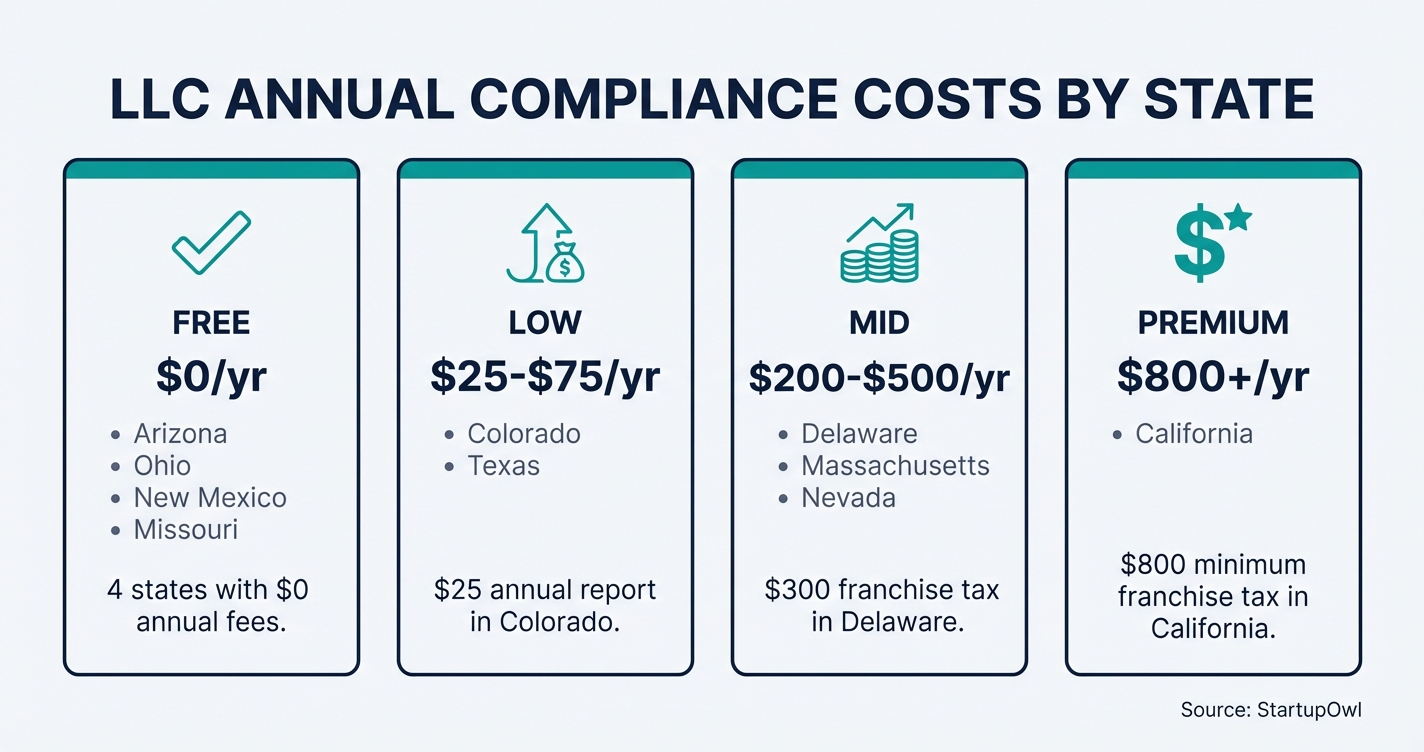
- Annual report fees range from $0 (Arizona, Ohio, Missouri, New Mexico) to $300 (Delaware). The national average is approximately $91 as of 2026.
- Franchise taxes add $0 to $800+ per year. California charges $800 regardless of income. LLCs in California earning over $250,000 in gross receipts pay an additional fee of $900 to $11,790.
- Local business license renewals typically cost $50 to $400 depending on your city and business type.
- Registered agent service runs $100 to $300 per year if you use a professional service. You can serve as your own registered agent for free, but you must be available at a physical address during business hours.
- Industry-specific permits (health permits, contractor licenses, liquor licenses) cost $50 to $500+ per renewal cycle.
For a typical single-state LLC with no specialized permits, budget $150 to $500 per year for total compliance costs. For a California LLC or one registered in multiple states, budget $1,000 to $2,000+. All business license and LLC fees are generally tax-deductible as ordinary business expenses. Consult a CPA about deducting these on your federal return.
Your compliance burden varies depending on your business type. Here is what to expect.
Freelancers and Consultants. You typically need a state annual report ($25 to $300) and possibly a local business license ($50 to $150). If you work from home, check whether your city requires a home occupation permit ($0 to $100). Total annual compliance cost is usually $75 to $400. Review our accounting setup guide to make tracking these expenses easier.
E-commerce Businesses. If you sell in multiple states, you may need to register as a foreign LLC and file annual reports in each state. Sales tax permits require separate renewals. Budget $200 to $1,000+ per year for multi-state compliance. You should also have general liability insurance in place.
Brick-and-Mortar Retail. Expect state filings plus city/county business licenses, signage permits ($50 to $150 per sign), and possibly zoning permits ($50 to $300). If you sell regulated items like tobacco or alcohol, add federal and state permit renewals. Total annual compliance cost runs $300 to $1,500+.
Professional Services (Lawyers, Accountants, Healthcare). Professional LLCs must renew occupational licenses ($100 to $500) with state licensing boards, on top of the standard annual report and business license renewals. Some states require continuing education credits before license renewal. Budget $400 to $1,200+ annually.
Restaurants and Food Service. The most compliance-heavy category. You need annual health department permits ($150 to $400), fire safety certificates, food handler certifications, and liquor licenses (if applicable). Total annual compliance cost often exceeds $1,000 to $3,000 when all permits are included.
These are the most expensive compliance mistakes LLC owners make, and every one of them is avoidable.
- Missing your annual report deadline. Late fees range from $25 (West Virginia) to $400 (Florida). If you stay delinquent long enough, the state will administratively dissolve your LLC. Reinstatement in Georgia costs $250 plus $50 per missed year. In North Carolina, you will owe $202 per missed year plus a $100 reinstatement fee.
- Assuming state registration covers local licenses. Your state business registration is separate from city and county licenses. Operating without a local business license can result in fines, forced closure, or denial of building permits. Always check with your local clerk's office.
- Forgetting about multi-state obligations. If your LLC does business in states beyond where it was formed, you must register as a foreign LLC and file annual reports (and pay fees) in each state. Skipping this means operating illegally and losing liability protection in those states.
- Letting your registered agent lapse. If your registered agent resigns or their service expires, the state cannot deliver legal notices to your LLC. This alone can trigger administrative dissolution. Budget $100 to $300 per year for a professional registered agent service and set it to auto-renew.
- Not tracking different renewal cycles. Your annual report, local business license, professional permits, and franchise taxes may all have different due dates. Use a single compliance calendar (spreadsheet or app) with reminders set 60 to 90 days before each deadline.
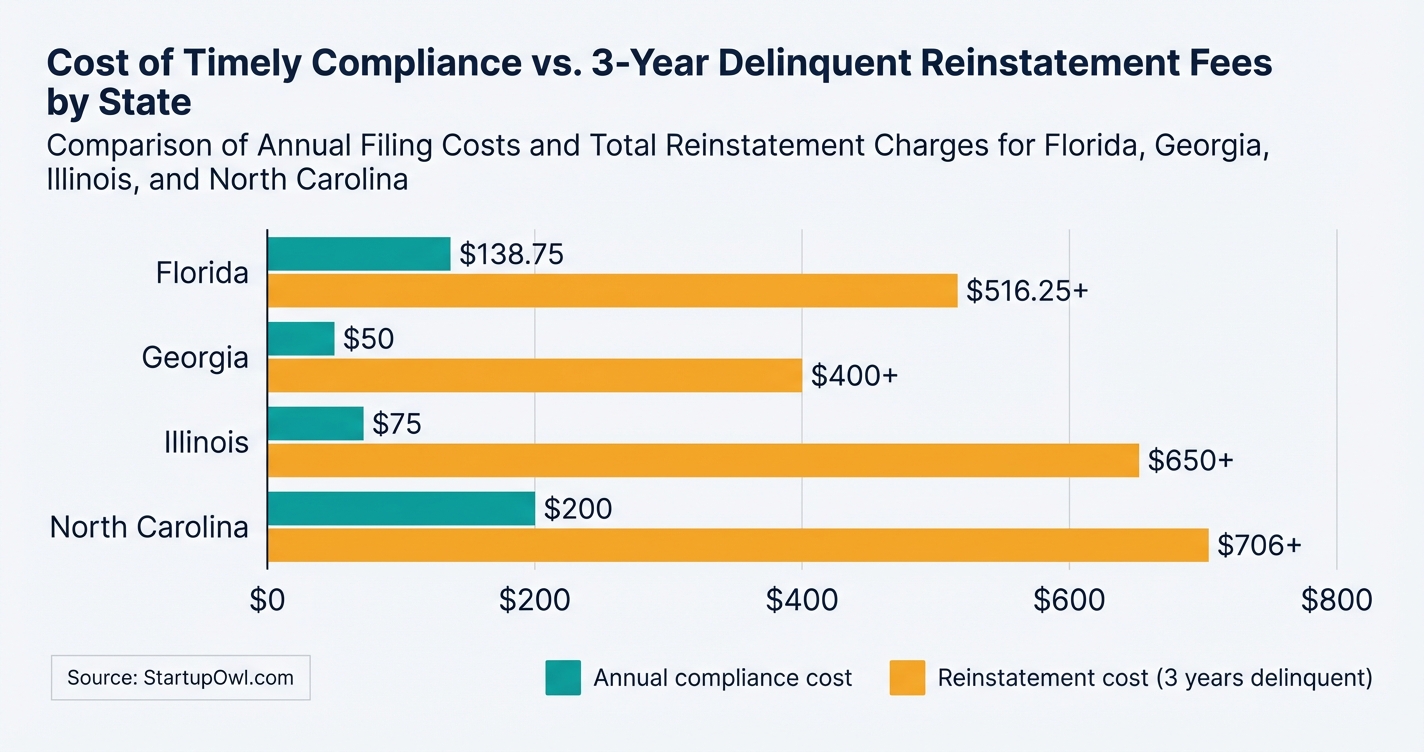
The cheapest path is always prevention. A $25 to $300 annual report filed on time beats a $500 to $2,000+ reinstatement bill every time. If you want help tracking deadlines, explore our best registered agent services page for providers that include compliance alerts.
Assuming the state will remind you
This one costs real money. Some states send a notice, some send nothing, and a few send it to your registered agent rather than to you. Delaware prints its tax notices and mails them to the agent. Pennsylvania writes to the registered office address at least two months out. Washington does the same unless you name an electronic address instead. Colorado, Wyoming and Massachusetts send nothing until you sign up for it. We checked eleven states and set out who gets the notice, and when, in the reminder section of our LLC annual report guide.
Frequently Asked Questions
Most general business license renewals cost $50 to $400 per year, with the exact amount depending on your city, county, and business type. Renewal fees are usually similar to (or slightly less than) your initial licensing cost. Specialized industry licenses like contractor or health permits can cost $100 to $500+ to renew.
Your state will charge a late fee (typically $25 to $400) and eventually administratively dissolve your LLC. Dissolution means you lose your liability protection, and your personal assets become exposed to business debts and lawsuits. Reinstatement fees range from $100 to $500+ plus all back annual reports and penalties owed.
Arizona, Missouri, New Mexico, and Ohio do not charge annual LLC fees as of 2026. Texas charges no annual report fee at all, though an LLC whose annualized revenue tops $2.65 million owes franchise tax on the same filing. However, even in these states, you may still owe local business license fees or need to file information reports at no cost.
You can absolutely file it yourself. Most states offer online filing that takes 10 to 20 minutes. Services like Northwest Registered Agent charge about $100 per year (plus state fees) to file on your behalf. DIY filing makes sense for single-state LLCs; a service is worth considering if you operate in multiple states.
Yes. Annual report fees, business license renewals, registered agent fees, and franchise taxes are generally deductible as ordinary business expenses on your federal tax return. Keep all receipts and records of these payments for your accounting records.
Search for your LLC on your state's Secretary of State website. Most states offer a free business entity search where you can verify your LLC's status. You can also request a Certificate of Good Standing for $5 to $50 depending on the state (for example, California charges $5 and Georgia charges $10).
Yes. Every state requires your LLC to maintain a registered agent with a physical address in that state. You can serve as your own agent for free, but you must be available at the listed address during business hours. Professional services like Northwest Registered Agent cost about $125/year and include mail scanning, compliance reminders, and a business address.
Sources & References
- SBA.gov - Stay Legally Compliant
- SBA.gov - Apply for Licenses and Permits
- IRS - Limited Liability Company (LLC)
- Georgia Secretary of State - Reinstate an Entity
- Illinois Secretary of State - LLC Reinstatement
- Northwest Registered Agent - Registered Agent Service
- Cogency Global - Annual Report Compliance Guide
About the Author
Editor, StartupOwl
Eliot leads StartupOwl's state data research. He maintains the site's fifty state records of LLC filing fees, annual costs, processing times, and small business grant programs, checking each figure against the state office that publishes it and logging the date it was verified. Based in New Jersey, he has spent his working life in and around small businesses, and he writes for the founder who wants the real number rather than the advertised one. Every figure under his byline traces to a named source, and when a state proves a number wrong, the correction is published, not buried.
Was this article helpful?
Questions about LLC Compliance Guide
No comments yet. Ask the first question and a member of our team will answer.
Leave a comment