

AngelList Review 2026
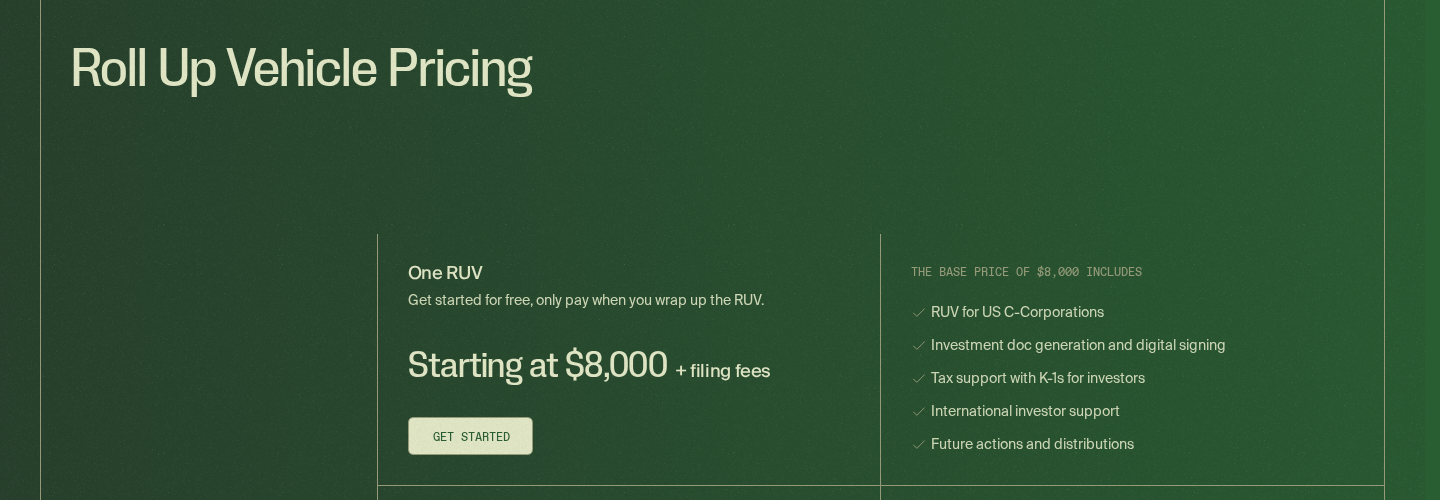
AngelList closed its standalone cap table to new customers on August 6, 2025. A founder can still buy a Roll Up Vehicle from Rollups for $8,000 plus filing fees, and a cap table only with one.

Our Verdict
3.5
Based on our independent review
60+ hours of research
Ease of Use
4.0/5
Pricing & Value
3.5/5
Features & Add-ons
3.8/5
Customer Support
3.2/5
Funding Speed
3.5/5
Pricing Transparency
3.3/5
Privacy & Data
3.5/5
Best For: Founders raising from many angels who want them in one entity and one line on the cap table.
True Year 1 Cost: $8,000
Year 2+ (renewal): $0
Top Advantages
- A Roll Up Vehicle puts many angel checks into one entity and one line on your cap table
- RUV pricing is flat, $8,000 for a standard US C-Corp RUV, paid when it closes, with Form D, Blue Sky filings and K-1s included
- Investors close with the AngelList account they already have, so KYC, accreditation and bank details are stored
From $8,000/mo · Cancel anytime
In This Article
How We Tested AngelList
On September 11, 2026 we read AngelList's startups page, its August 6, 2025 cap table announcement and product FAQ, the July 30, 2025 Rollups launch post, the Rollups RUV pricing page and the AngelList SPV pricing page. We read its Trustpilot profile the same day. We have not opened an RUV or paid AngelList.
AngelList Overview
What AngelList sells founders now
AngelList moved its company products into a brand called Rollups on July 30, 2025. Rollups sells two things. A Roll Up Vehicle (RUV) lets a company raise from many investors through one entity. The whole group is then one line on the cap table. A Consolidation Vehicle (CV) moves existing small holders into one entity after the fact. AngelList says RUVs have put over $1 billion into startups since launch. Investors join through the AngelList accounts they already hold. Rollups.com says the platform holds $171 billion in assets.
The cap table product is closed to new customers
On August 6, 2025 AngelList's CEO Avlok Kohli announced that the standalone cap table would take no new customers. A rebuilt cap table with RUVs and CVs built in is the only option for new companies. AngelList sells it only to companies using those vehicles, with pricing by quote from [email protected]. Existing customers keep their software, support and pricing. AngelList is not building new features for the old version. So it offers a free, automated move to J.P. Morgan Workplace Solutions, which has a free plan for companies with 40 or fewer stakeholders, or to Pulley.
Who should use it
AngelList fits a founder whose round has more investors than a clean cap table can hold. If 40 angels want in, an RUV takes all 40 as one investor for $8,000 plus filing fees. It does not fit a founder who wants a cap table tool on its own. That product is gone for new companies. It also cannot take unaccredited investors.
What AngelList Actually Costs
True Cost Analysis
Starting Monthly Price
From $8,000
One-time RUV setup, paid when the RUV closes
Annual Plan
$0
If paid annually
The first year figure is the flat $8,000 setup for a standard Roll Up Vehicle on a US C-Corp, paid when the RUV closes. State filing fees come on top and depend on where your investors live. There is no renewal on an RUV. Cap table pricing is not published. AngelList quotes it only to companies using RUVs or Consolidation Vehicles, so it is left out rather than guessed.
AngelList Pricing Plans
See live pricing →Roll Up Vehicle (Rollups)
Most Popular$8,000
+ state filing fees, paid at close
- Standard RUV for a US C-Corp
- Many accredited investors, one entity, one cap table line
- Form D, Blue Sky filings and investor K-1s included
- One wire into your company account
Cap Table (RUV and CV users)
Quote only
Sold only to companies using RUVs or CVs
- Closed to new standalone customers since August 6, 2025
- Price from [email protected]
- Existing customers keep software, support and price
SPV (syndicate leads)
$8,000
+ $2,000 state regulatory fee
- Follow-on SPV $5,000 plus $2,000
- Minimum raise $80,000, $50,000 for follow-ons
- Investor fees capped at 10 percent of commitment
AngelList Pros and Cons
Pros
- A Roll Up Vehicle puts many angel checks into one entity and one line on your cap table
- RUV pricing is flat, $8,000 for a standard US C-Corp RUV, paid when it closes, with Form D, Blue Sky filings and K-1s included
- Investors close with the AngelList account they already have, so KYC, accreditation and bank details are stored
- Existing cap table customers keep their software, support and price, and migration to J.P. Morgan or Pulley is free with no deadline
Cons
- The standalone cap table has been closed to new customers since August 6, 2025, and the new version is sold only to RUV and CV users at an unpublished price
- Every investor in an RUV must be accredited, so a friends and family round of small unaccredited checks cannot use one
- AngelList is no longer building features for the old cap table, which is why it points leavers to J.P. Morgan Workplace Solutions and Pulley
- Trustpilot scores AngelList 1.8 from 23 reviews, and the profile mixes in complaints about unrelated companies and the old job board
Upsell Pressure & Hidden Fees
Transparency Check, We Documented Every Upsell
The RUV price is flat at $8,000 and paid at close, with Form D, Blue Sky filings and K-1s built in. The one variable is state filing fees, which Rollups says depend on where your investors live. The upsell to watch is the cap table itself. AngelList sells its new cap table only to RUV and CV customers and quotes the price by email. So a founder who opens an RUV and wants the cap table too cannot see that cost up front.
Pricing Transparency Score
3.3/5
5 = Fully transparent pricing · 1 = Heavy upsell pressure
What Real Customers Say
Reddit / Community Sentiment
Reddit talks about AngelList as an investor, not as a founder tool. The two threads Google surfaces for this search are in r/AngelInvesting. My experience with AngelList so far has 50 plus comments, and Opinions on AngelList from November 2025 has 20 posts. Both argue over syndicate deal quality. Founder-side discussion of RUVs is thin. Trustpilot's 23 reviews score 1.8 and several are about unrelated companies, so neither source says much about running an RUV.
Is AngelList Right for You?
Best For These Founders
Founders with a crowded round
You have 20 to 100 angels who want in. An RUV takes all of them as one investor and one signature at the next round.
Companies with a messy cap table
A Consolidation Vehicle moves early SAFE holders and small checks into one entity before a Series B or an acquisition.
Existing AngelList cap table customers
Your plan, support and price do not change. Stay, or move to J.P. Morgan or Pulley for free whenever you want.
Consider Alternatives If…
You want a standalone cap table tool for a new company, AngelList stopped selling one on August 6, 2025.
Your investors are not all accredited, an RUV cannot take them.
You need published cap table pricing before a sales call, AngelList quotes it only to RUV and CV users.
How a Roll Up Vehicle works
You open an RUV on rollups.com and invite investors. Each one invests through an AngelList account. That account already holds their identity check, accreditation and bank details, so a close takes minutes rather than weeks. You track the raise, sign once, and receive one wire from Rollups into your company account. Rollups files the Form D and state Blue Sky notices and sends every investor a K-1. All investors must be accredited under US rules. Investors outside the US are accepted where local law allows. AngelList also runs standalone Consolidation Vehicles. They do the same job for holders already on your cap table. Both work with any cap table software.
Pricing
A standard RUV for a US C-Corp costs a flat $8,000, paid when the RUV closes. State filing fees come on top and depend on where your investors live. Rollups says the known fixed costs are built into that price. More complex structures are quoted by its deal team. An SPV run by a syndicate lead costs $8,000 plus a $2,000 state regulatory fee. A follow-on into the same company is $5,000 plus $2,000, and the minimum raise is $80,000. Cap table pricing is not published. AngelList sells the new cap table only to companies using RUVs or CVs and quotes it by email, so we do not print a number for it.
True Cost Breakdown
A founder raising from 30 angels pays $8,000 once for the RUV plus filing fees, and nothing at renewal. The old cap table plans are closed. So there is no annual software fee to add unless AngelList quotes you the new version. For comparison, AngelList's own migration page says J.P. Morgan Workplace Solutions has a free plan for companies with 40 or fewer stakeholders. It also says cap table service is free for up to 100 stakeholders for three years if you also use J.P. Morgan Startup Banking. Those are AngelList's stated partner terms, not our test.
What happens if you were already a customer
AngelList's product update FAQ says an existing customer can do nothing and keep working as before. Software, support and price do not change. There is no deadline to migrate. The data export is free and works with any provider. J.P. Morgan's free plan covers companies with 40 or fewer stakeholders, and it honours the time left on your AngelList subscription so you do not pay twice. If you stop renewing and do not migrate, your data becomes read only but the reports stay open. Roll Up Vehicles and fundraising rounds are not affected.
Customer Reviews
AngelList's Trustpilot profile sits at 1.8 from 23 reviews as of September 11, 2026. The company claimed the profile in September 2024. Read the reviews before you weigh the number. Several are about unrelated businesses. One describes a fence installer and another a home services marketplace. The older ones cover the job board that AngelList no longer owns. The ones that do concern AngelList come from investors unhappy with syndicate support, not from founders running an RUV. AngelList does not publish support response times. Founder support runs through [email protected] and the Rollups team.
vs. Competitors
AngelList's own migration page compares the two cap table partners it names. J.P. Morgan Workplace Solutions, the former Global Shares business, has a free plan for companies with 40 or fewer stakeholders and an automated migration with no sales call. Pulley gives onboarding help to AngelList customers who move over. AngelList itself says those products may cost less than a current AngelList plan. Neither offers the RUV. That is why AngelList says standalone RUVs and CVs keep working with any cap table provider. We have not tested J.P. Morgan or Pulley and do not rank them.
Final Verdict
AngelList is now a Roll Up Vehicle vendor for founders, not a cap table vendor. The standalone cap table closed to new customers on August 6, 2025. The rebuilt version is sold only to RUV and CV users, at a price AngelList quotes by email. The RUV itself is clear. It is $8,000 flat for a standard US C-Corp, paid at close, with filings and K-1s included, and accredited investors only. Use it if your round has more angels than your cap table should carry. If you want a cap table tool on its own, AngelList's own advice is to look at its migration partners.
By Eliot Reynolds, Editor, StartupOwl
Frequently Asked Questions
This review reflects independent, first-hand testing by the StartupOwl team. Affiliate relationships never influence our ratings or recommendations. Read our editorial policy →
About the Author
Editor, StartupOwl
Eliot leads StartupOwl's state data research. He maintains the site's fifty state records of LLC filing fees, annual costs, processing times, and small business grant programs, checking each figure against the state office that publishes it and logging the date it was verified. Based in New Jersey, he has spent his working life in and around small businesses, and he writes for the founder who wants the real number rather than the advertised one. Every figure under his byline traces to a named source, and when a state proves a number wrong, the correction is published, not buried.
Was this article helpful?

Questions about AngelList
No comments yet. Ask the first question and a member of our team will answer.
Leave a comment